

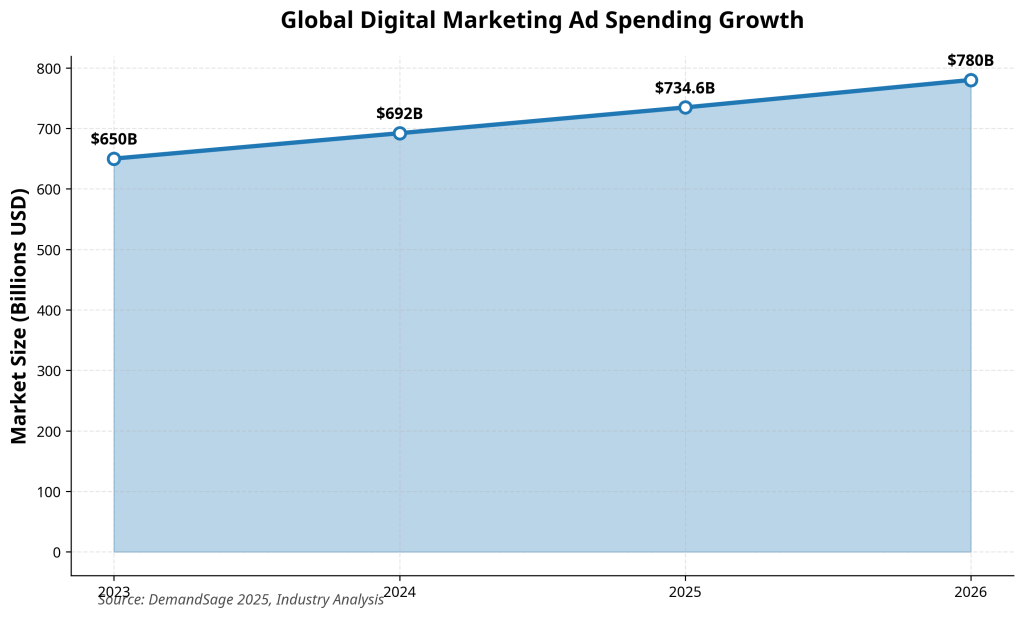
The digital marketing landscape has evolved into a $734.6 billion global industry, with businesses achieving an average return of $5 for every dollar invested in digital channels. As organizations navigate an increasingly complex digital ecosystem, the strategic selection and implementation of marketing tools have become critical for sustainable growth. Recent research from McKinsey & Company reveals that 75% of CMOs cite digital marketing as their primary activity for delivering growth objectives, while 84% report significant challenges in developing and executing effective marketing strategies [1][2].
This comprehensive analysis examines five essential categories of digital marketing tools that are driving business transformation in 2025: SEO optimization platforms, email marketing automation systems, social media management solutions, analytics and reporting tools, and content creation platforms. Drawing from authoritative sources including Gartner research, Boston Consulting Group studies, and industry data from WARC and IAB, this report provides evidence-based insights into tool selection, implementation strategies, and measurable outcomes.
The data reveals striking disparities in return on investment across different digital marketing channels, with email marketing delivering an exceptional $36 return for every dollar spent, while SEO tools generate $22 in returns per dollar invested [3]. However, successful digital marketing transformation requires more than tool selection—it demands strategic integration, ongoing optimization, and a clear understanding of both opportunities and limitations inherent in each platform.
Digital Marketing Market Context and 2025 Outlook
The digital marketing industry continues to experience unprecedented growth, driven by accelerating digital transformation initiatives and evolving consumer behavior patterns. According to comprehensive market analysis, global digital advertising spending reached $734.6 billion in 2025, representing sustained growth from previous years and reflecting businesses’ increasing reliance on digital channels to reach customers [3].
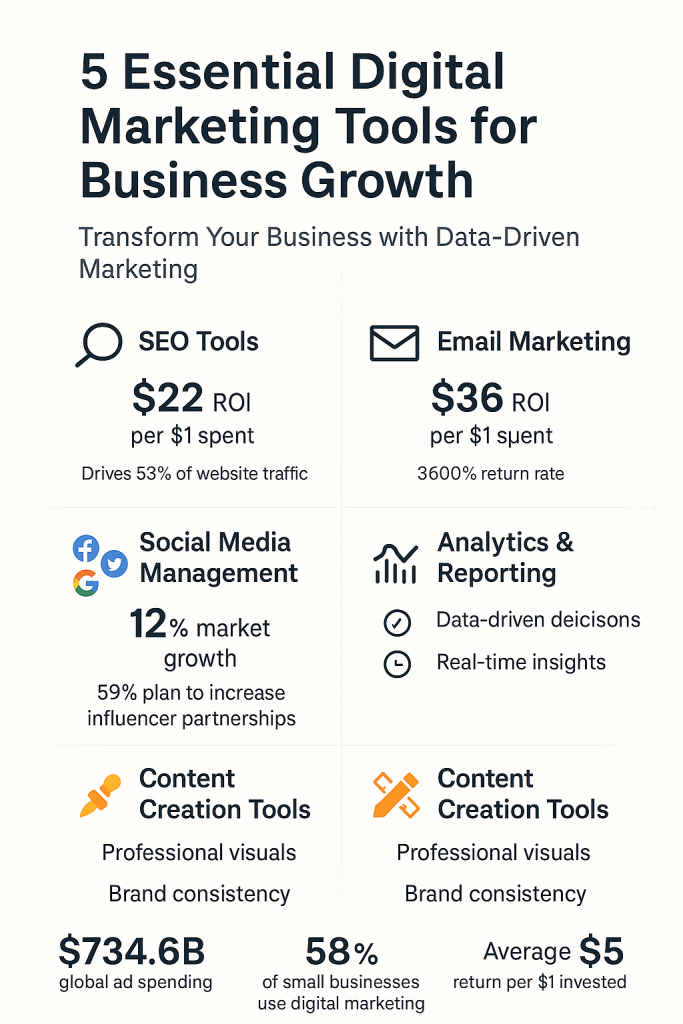
This growth trajectory is particularly significant when examined through the lens of small and medium-sized businesses, where 58% now rely on digital marketing channels as their primary customer acquisition strategy [3]. The shift represents a fundamental change in how businesses approach market engagement, moving from traditional advertising models to data-driven, measurable digital strategies.
Market Dynamics and Investment Patterns
Current market research reveals several critical trends shaping digital marketing tool adoption. Boston Consulting Group’s 2025 survey of marketing executives indicates that 71% of marketers plan to invest at least $10 million in artificial intelligence technologies over the next three years, representing a significant increase from 57% in 2024 [2]. This investment pattern reflects growing recognition of AI’s potential to enhance marketing effectiveness and operational efficiency.
The allocation of marketing budgets provides additional insight into strategic priorities. Gartner research shows that average marketing budgets constitute 7.7% of company revenue, with 30.6% of total budgets allocated specifically to paid media channels [2]. However, the distribution across different digital channels varies significantly based on industry, target audience, and business objectives.
Consumer Behavior and Channel Preferences
Understanding consumer behavior patterns is essential for effective tool selection and strategy development. Recent data from Sprout Social reveals that 76% of social media users report that social content influenced their purchase decisions, with this figure rising to 90% among Generation Z consumers [2]. This generational shift has profound implications for businesses seeking to optimize their digital marketing tool stack.
The research also highlights changing information-seeking behaviors, with 41% of Generation Z consumers using social media as their first source when looking for information, compared to 32% who turn to traditional search engines and 11% who use chat-based AI [2]. These patterns underscore the importance of multi-channel approaches and the need for tools that can effectively manage diverse digital touchpoints.
Economic Factors and Strategic Challenges
Despite overall market growth, businesses face significant challenges in digital marketing strategy development and execution. Gartner research indicates that 84% of Chief Marketing Officers report difficulty in developing and executing marketing strategies, while only 15% plan beyond three years [2]. These findings suggest that while investment in digital marketing tools continues to grow, many organizations struggle with strategic implementation and long-term planning.
Economic uncertainty also influences consumer behavior and marketing effectiveness. Current data shows that 42% of consumers have decided to wait on making larger purchases in 2025, up from 28% in early 2024 [2]. This shift requires marketers to adapt their strategies and tool utilization to address changing consumer sentiment and purchasing patterns.
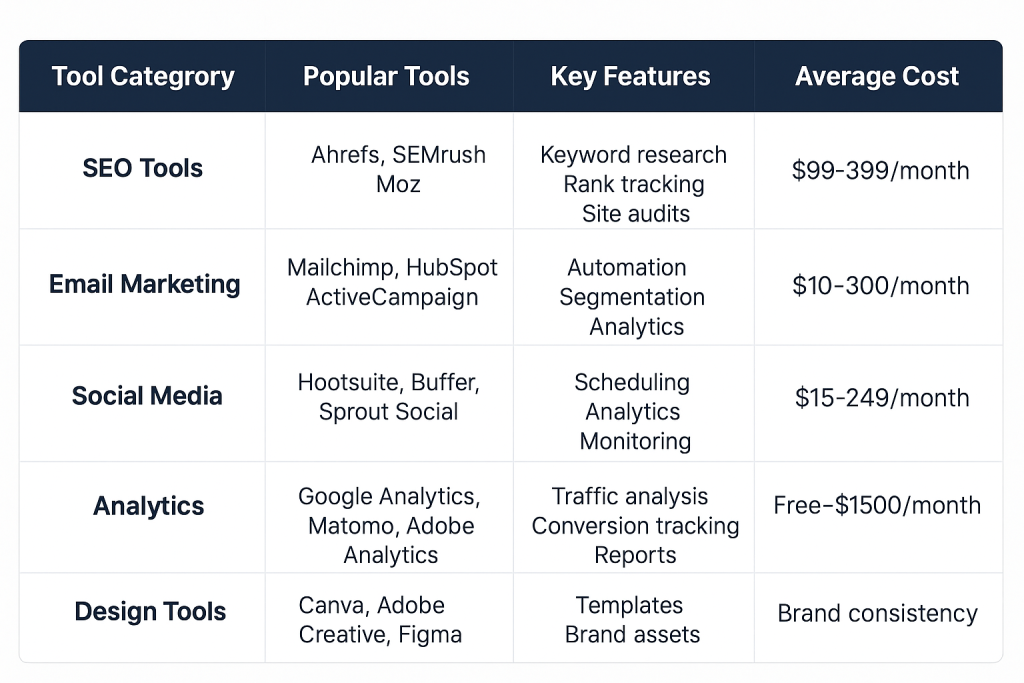
The infographic above illustrates the five essential categories of digital marketing tools that form the foundation of successful digital marketing strategies. Each category serves distinct functions while contributing to overall marketing effectiveness and business growth objectives.
SEO Tools: Foundation of Organic Growth
Search Engine Optimization tools represent the cornerstone of sustainable digital marketing strategies, generating an impressive $22 return for every dollar invested while driving 53% of all website traffic [3]. The significance of SEO tools extends beyond immediate traffic generation, as they provide the foundation for long-term organic visibility and brand authority development.
Market-Leading SEO Platforms and Capabilities
The SEO tools landscape is dominated by several comprehensive platforms that offer distinct advantages for different business needs. Ahrefs, SEMrush, and Moz represent the most widely adopted solutions, each providing core functionalities including keyword research, rank tracking, site auditing, and competitive analysis. These platforms have evolved from simple keyword tools to comprehensive SEO ecosystems that support strategic decision-making across multiple dimensions of search optimization.
Ahrefs distinguishes itself through its extensive backlink database and content gap analysis capabilities, making it particularly valuable for businesses focused on link building and competitive content strategies. The platform’s Site Explorer feature provides detailed insights into competitor organic traffic patterns, enabling marketers to identify high-value keyword opportunities and content themes that drive meaningful traffic.
SEMrush offers a broader digital marketing toolkit that extends beyond traditional SEO to include paid advertising research, social media monitoring, and content marketing tools. This integrated approach makes it particularly suitable for businesses seeking a unified platform for multiple digital marketing activities. The platform’s Position Tracking feature provides granular visibility into keyword ranking performance across different geographic markets and device types.
Moz focuses on user-friendly interfaces and educational resources, making it an excellent choice for businesses new to SEO or those with limited technical expertise. The platform’s Domain Authority metric has become an industry standard for evaluating website credibility, while its Local SEO tools provide specialized capabilities for businesses with geographic service areas.
Implementation Strategies and Best Practices
Successful SEO tool implementation requires a systematic approach that aligns with broader business objectives and marketing strategies. The most effective implementations begin with comprehensive website audits that identify technical issues, content gaps, and optimization opportunities. These audits should examine site architecture, page loading speeds, mobile responsiveness, and content quality to establish baseline performance metrics.
Keyword research represents the foundation of effective SEO strategy, but modern approaches extend beyond simple search volume analysis. Successful businesses focus on keyword intent mapping, which aligns search queries with specific stages of the customer journey. This approach enables more targeted content creation and improved conversion rates from organic traffic.
Competitive analysis capabilities within SEO tools provide valuable insights for strategic planning and opportunity identification. By analyzing competitor content strategies, backlink profiles, and keyword targeting approaches, businesses can identify market gaps and develop differentiated positioning strategies. However, it’s important to note that competitive analysis should inform rather than dictate strategy, as blind imitation often leads to commoditized positioning.
Limitations and Challenges
Despite their significant value, SEO tools face several inherent limitations that businesses must understand and address. Data accuracy represents a persistent challenge, as no single tool provides complete visibility into search engine algorithms or ranking factors. Different platforms often report varying metrics for the same websites, requiring marketers to triangulate data across multiple sources for accurate insights.
The time lag between SEO implementation and measurable results creates additional challenges for businesses seeking immediate returns. Unlike paid advertising channels that provide immediate feedback, SEO initiatives typically require 3-6 months to demonstrate meaningful impact. This timeline can create tension between short-term performance expectations and long-term strategic objectives.
Algorithm updates from search engines can significantly impact SEO tool effectiveness and strategy validity. Google’s frequent algorithm changes, including major updates like Core Web Vitals and helpful content updates, can render existing strategies less effective and require continuous adaptation of tool utilization and strategic approaches.
ROI Measurement and Performance Metrics
Measuring SEO tool ROI requires sophisticated attribution models that account for the long-term nature of organic search benefits. The $22 return per dollar invested represents an average across multiple industries and implementation approaches, but individual results vary significantly based on competitive landscape, implementation quality, and strategic alignment [3].
Key performance indicators for SEO tool effectiveness include organic traffic growth, keyword ranking improvements, conversion rate optimization, and brand visibility metrics. However, businesses must also consider indirect benefits such as improved user experience, enhanced brand credibility, and reduced dependence on paid advertising channels.
The most successful SEO tool implementations integrate with broader analytics platforms to provide comprehensive attribution analysis. This integration enables businesses to understand the full customer journey and accurately attribute conversions to organic search activities, providing more accurate ROI calculations and strategic insights.
Email Marketing Automation: Highest ROI Channel
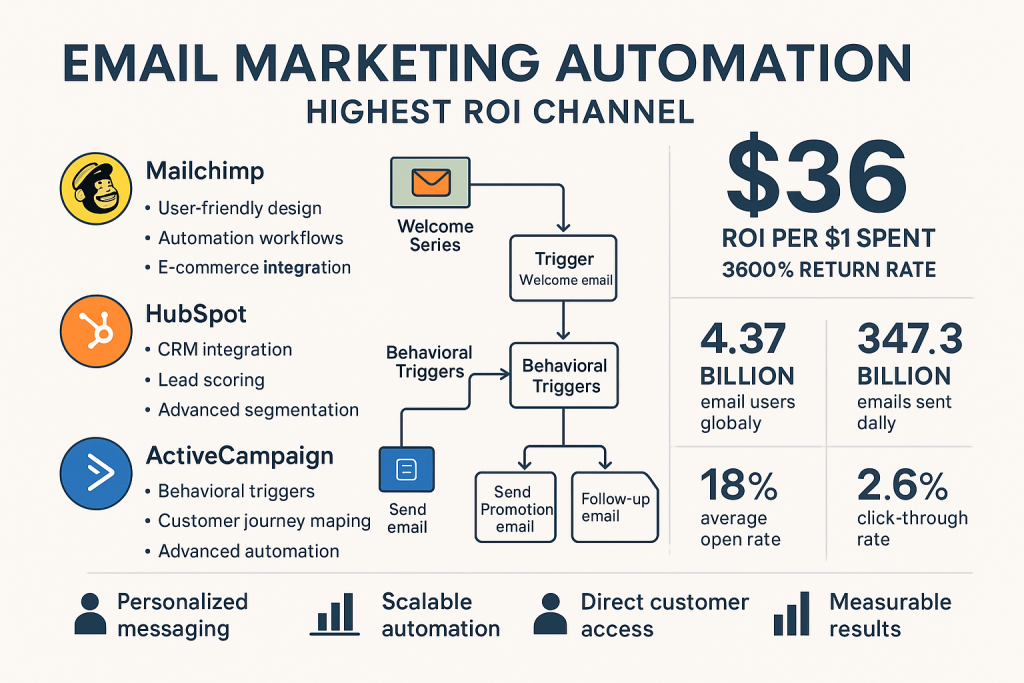
Email marketing automation stands as the most financially effective digital marketing channel, delivering an exceptional $36 return for every dollar invested, representing a 3600% return on investment [3]. This remarkable performance stems from email’s unique combination of direct customer access, personalization capabilities, and measurable engagement metrics that enable precise optimization and targeting.
Platform Ecosystem and Core Capabilities
The email marketing automation landscape encompasses platforms ranging from entry-level solutions to enterprise-grade systems with advanced artificial intelligence capabilities. Mailchimp, HubSpot, and ActiveCampaign represent the most widely adopted platforms, each offering distinct advantages for different business models and growth stages.
Mailchimp has established itself as the leading platform for small to medium-sized businesses, offering intuitive design tools, comprehensive automation workflows, and integrated e-commerce capabilities. The platform’s strength lies in its user-friendly interface and extensive template library, which enables businesses with limited technical resources to create professional email campaigns. Recent platform updates have introduced advanced segmentation capabilities and predictive analytics features that enhance targeting precision.
HubSpot provides a comprehensive inbound marketing ecosystem that integrates email marketing with customer relationship management, content management, and sales automation. This integrated approach enables sophisticated lead nurturing workflows that align marketing and sales activities. The platform’s lead scoring capabilities and behavioral tracking provide detailed insights into prospect engagement patterns, enabling more effective conversion optimization.
ActiveCampaign focuses on advanced automation capabilities and customer experience optimization. The platform’s visual automation builder enables complex, multi-channel workflows that respond to customer behavior patterns and engagement signals. This sophistication makes it particularly suitable for businesses with complex sales cycles or multiple product lines requiring differentiated messaging strategies.
Strategic Implementation and Automation Workflows
Successful email marketing automation requires strategic planning that extends beyond basic newsletter distribution to encompass comprehensive customer journey mapping and behavioral trigger implementation. The most effective implementations begin with detailed audience segmentation based on demographic data, behavioral patterns, and engagement history.
Welcome series automation represents the foundation of effective email marketing strategy, as new subscribers demonstrate the highest engagement rates during their initial interactions with brands. Research indicates that welcome emails generate 320% more revenue per email than other promotional messages, making them critical for establishing positive customer relationships and driving immediate value [3].
Behavioral trigger automation enables personalized communication based on specific customer actions or inactions. Abandoned cart recovery emails, for example, can recover 10-15% of potentially lost sales when implemented with appropriate timing and messaging strategies. These automated workflows operate continuously without manual intervention, providing scalable customer engagement that improves over time through optimization and testing.
Advanced segmentation strategies enable highly targeted messaging that improves both engagement rates and conversion performance. The most effective approaches combine demographic data with behavioral signals and purchase history to create dynamic segments that automatically update based on customer actions. This approach enables personalized messaging at scale while maintaining operational efficiency.
Performance Metrics and Optimization Strategies
Email marketing success requires continuous monitoring and optimization across multiple performance dimensions. Industry benchmarks indicate average open rates of 18%, click-through rates of 2.6%, and click-to-open rates of 14.1% globally [3]. However, these averages vary significantly across industries, with B2B technology companies typically achieving higher engagement rates than retail or e-commerce businesses.
Subject line optimization represents one of the most impactful areas for performance improvement. Research shows that emails with emojis in subject lines achieve 56% higher conversion rates compared to plain text alternatives [3]. However, emoji usage must align with brand voice and audience expectations to avoid appearing unprofessional or spam-like.
Mobile optimization has become critical for email marketing success, as 36.6% of emails are opened on mobile devices daily [3]. Despite this trend, approximately 20% of marketing email campaigns remain unoptimized for mobile viewing, representing a significant opportunity for competitive advantage through improved user experience.
A/B testing capabilities enable systematic optimization of email elements including subject lines, send times, content formats, and call-to-action placement. The most effective testing approaches focus on single variables to ensure accurate attribution of performance changes. Testing should be conducted continuously rather than as isolated experiments to account for seasonal variations and audience evolution.
Challenges and Limitations
Despite its exceptional ROI potential, email marketing faces several significant challenges that businesses must address for optimal performance. Deliverability issues represent the most critical concern, as emails that fail to reach recipient inboxes generate zero return regardless of content quality or targeting precision.
Spam filter algorithms continue to evolve, requiring ongoing attention to sender reputation management, authentication protocols, and content optimization. Businesses must maintain clean email lists, implement proper authentication (SPF, DKIM, DMARC), and monitor sender reputation metrics to ensure consistent inbox delivery.
Privacy regulations including GDPR, CCPA, and emerging legislation create compliance requirements that affect email marketing operations. These regulations require explicit consent for email collection, provide recipients with data access rights, and impose penalties for non-compliance. Businesses must implement appropriate consent management systems and data handling procedures to maintain regulatory compliance.
Email fatigue represents a growing challenge as consumers receive increasing volumes of marketing messages. The average business professional receives 121 emails daily, creating intense competition for attention and engagement [3]. This environment requires sophisticated segmentation and frequency optimization to maintain subscriber engagement without overwhelming recipients.
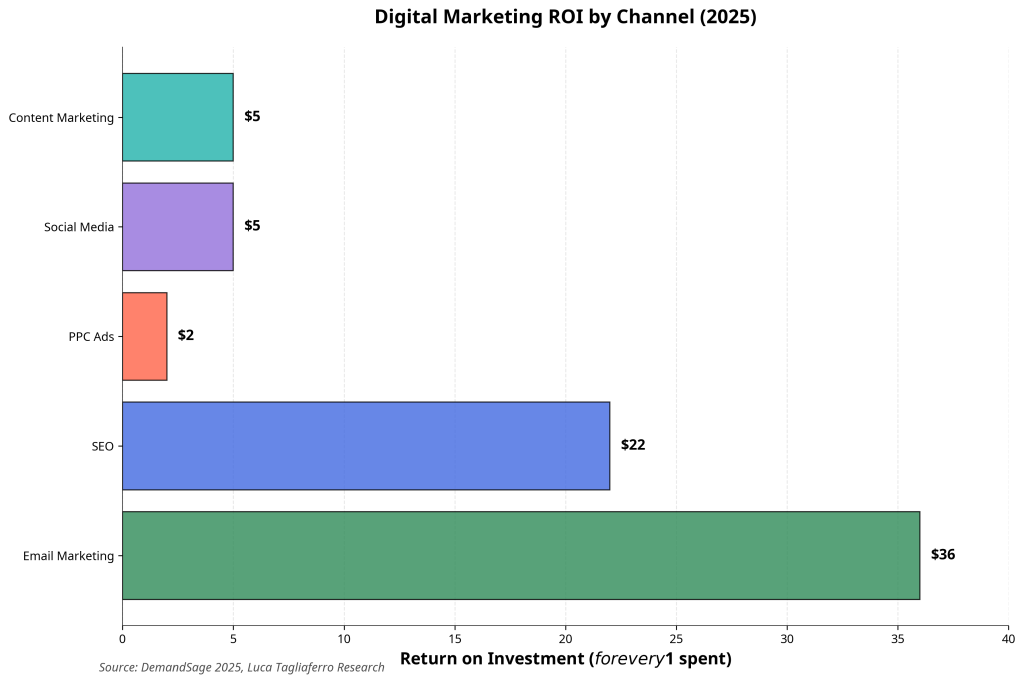
The chart above illustrates the significant ROI advantage of email marketing compared to other digital marketing channels, highlighting why it remains the most financially effective tool for customer engagement and conversion.
Social Media Management: Engagement and Brand Building
Social media management tools have become essential infrastructure for modern businesses, with the global social media advertising market expected to grow 12% in 2025 and 59% of marketers planning to increase influencer partnerships compared to 2024 [2]. These platforms serve dual functions as customer engagement channels and brand building mechanisms, requiring sophisticated management tools to optimize performance across multiple networks and audience segments.
Platform Landscape and Core Functionalities
The social media management ecosystem is dominated by comprehensive platforms that enable centralized control of multiple social networks while providing analytics and optimization capabilities. Hootsuite, Buffer, and Sprout Social represent the most established solutions, each offering distinct approaches to social media workflow management and performance optimization.
Hootsuite pioneered the social media dashboard concept and remains the most widely adopted platform for enterprise-level social media management. The platform’s strength lies in its extensive integration capabilities, supporting over 35 social networks and numerous third-party applications. This breadth makes it particularly suitable for large organizations managing complex social media ecosystems across multiple brands, regions, or business units.
Buffer focuses on simplicity and user experience, making it an excellent choice for small to medium-sized businesses seeking straightforward social media scheduling and basic analytics. The platform’s clean interface and intuitive workflow design reduce the learning curve for teams new to social media management tools. Recent updates have introduced advanced analytics capabilities and team collaboration features that enhance its appeal for growing businesses.
Sprout Social emphasizes customer relationship management and social listening capabilities, positioning itself as a comprehensive social customer care platform. The platform’s unified inbox feature enables teams to manage customer inquiries, comments, and mentions across multiple networks from a single interface. This approach is particularly valuable for businesses that prioritize customer service and community management as core social media objectives.
Content Strategy and Audience Engagement
Effective social media management extends beyond content scheduling to encompass comprehensive audience engagement strategies and community building initiatives. Research indicates that 76% of social media users report that social content influenced their purchase decisions, with this figure rising to 90% among Generation Z consumers [2]. This influence creates significant opportunities for businesses that can develop authentic, engaging content strategies.
Content planning and scheduling capabilities enable consistent brand presence across multiple platforms while optimizing posting times for maximum audience engagement. The most effective approaches combine evergreen content with timely, relevant posts that respond to current events, industry trends, or seasonal opportunities. Advanced scheduling tools provide optimal posting time recommendations based on historical engagement data and audience activity patterns.
Social listening functionality enables businesses to monitor brand mentions, competitor activities, and industry conversations that inform content strategy and customer service responses. This capability extends beyond basic mention tracking to include sentiment analysis, trend identification, and influencer discovery. Businesses that effectively utilize social listening can identify emerging opportunities, address customer concerns proactively, and develop content that resonates with their target audiences.
Community management represents a critical but often underestimated aspect of social media success. Effective community management requires prompt response to customer inquiries, thoughtful engagement with user-generated content, and proactive participation in relevant industry conversations. Research shows that customers expect responses to social media inquiries within one hour, making efficient workflow management essential for maintaining positive brand perception [2].
Analytics and Performance Measurement
Social media analytics provide essential insights for strategy optimization and ROI measurement, but the complexity of social media attribution requires sophisticated measurement approaches. Unlike direct response channels, social media often influences customer behavior through multiple touchpoints over extended periods, making traditional attribution models inadequate for comprehensive performance assessment.
Engagement metrics, including likes, shares, comments, and click-through rates, provide immediate feedback on content performance and audience preferences. However, these metrics must be evaluated within the context of broader business objectives rather than as standalone success indicators. High engagement rates that don’t translate to website traffic, lead generation, or sales may indicate misalignment between content strategy and business goals.
Reach and impression metrics help businesses understand content distribution effectiveness and audience growth patterns. These metrics are particularly important for brand awareness campaigns and content that aims to expand market presence. However, businesses must balance reach optimization with engagement quality to ensure that expanded audiences include genuinely interested prospects rather than passive observers.
Conversion tracking capabilities enable businesses to connect social media activities with specific business outcomes, including website visits, lead generation, and sales. This attribution requires proper implementation of tracking pixels, UTM parameters, and conversion goals within analytics platforms. The most sophisticated implementations utilize multi-touch attribution models that account for social media’s role in complex customer journeys.
Emerging Trends and Platform Evolution
The social media landscape continues to evolve rapidly, with new platforms, features, and user behaviors creating both opportunities and challenges for businesses. The rise of short-form video content, particularly on platforms like TikTok and Instagram Reels, has fundamentally changed content creation requirements and audience expectations.
Artificial intelligence integration within social media management tools is enabling more sophisticated automation and optimization capabilities. AI-powered features include optimal posting time recommendations, content performance predictions, and automated response suggestions for customer inquiries. These capabilities can significantly improve efficiency while maintaining personalized customer interactions.
Social commerce functionality is transforming social media platforms from engagement channels into direct sales platforms. Features like Instagram Shopping, Facebook Marketplace, and TikTok Shopping enable businesses to complete transactions without directing customers to external websites. This evolution requires social media management tools to integrate with e-commerce platforms and provide comprehensive sales attribution.
Implementation Challenges and Limitations
Despite their significant value, social media management tools face several limitations that businesses must understand and address. Platform algorithm changes can significantly impact content reach and engagement, often requiring strategy adjustments and tool reconfiguration. These changes are typically announced with limited notice, creating challenges for businesses that rely heavily on organic social media reach.
Content creation scalability represents a persistent challenge for businesses seeking to maintain a consistent, high-quality social media presence. While management tools can streamline publishing and scheduling processes, they cannot replace the creative work required for compelling content development. Businesses must balance automation efficiency with authentic, engaging content that resonates with their audiences.
Cross-platform consistency while maintaining platform-specific optimization creates additional complexity for social media management. Each platform has distinct audience expectations, content formats, and engagement patterns that require tailored approaches. Management tools must accommodate these differences while enabling efficient workflow management across multiple platforms.
Analytics and Reporting: Data-Driven Decision Making
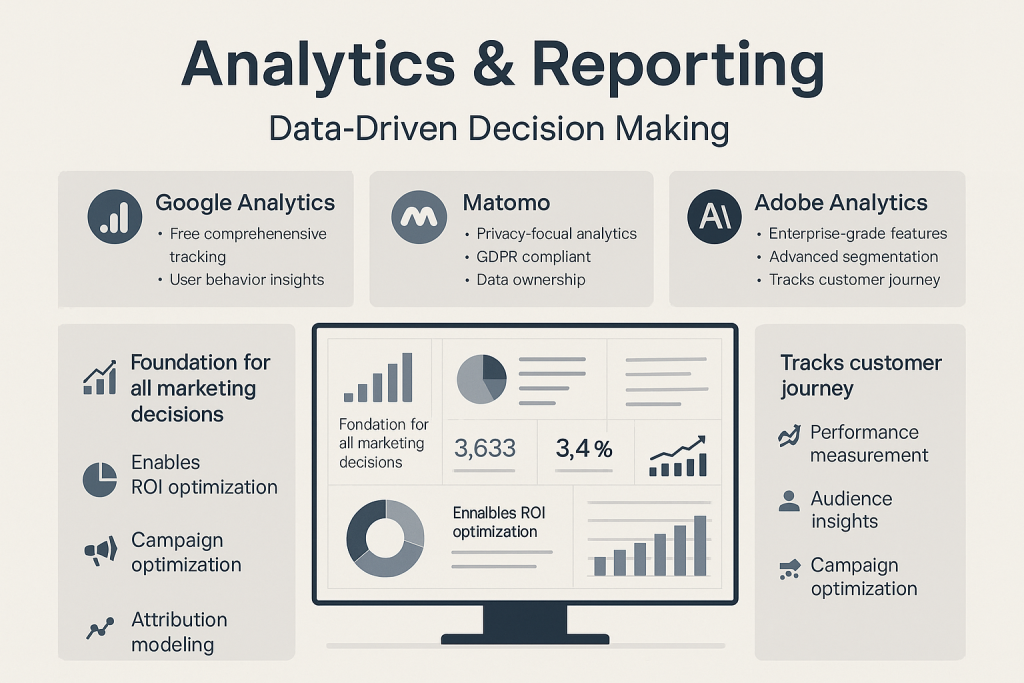
Analytics and reporting tools form the intelligence backbone of successful digital marketing operations, enabling data-driven decision making that optimizes performance across all marketing channels. While these tools may not generate direct revenue like email marketing or SEO, they provide the insights necessary to maximize return on investment across the entire marketing technology stack.
Platform Ecosystem and Capabilities
The analytics landscape encompasses both free and premium solutions, with Google Analytics dominating the market through its comprehensive feature set and zero-cost accessibility. Google Analytics 4 represents the current standard for website analytics, providing detailed insights into user behavior, traffic sources, conversion paths, and audience demographics. The platform’s integration with other Google marketing tools creates a unified ecosystem for campaign management and performance measurement.
Matomo offers a privacy-focused alternative to Google Analytics, providing similar functionality while maintaining complete data ownership and GDPR compliance. This platform is particularly valuable for businesses operating in regulated industries or those prioritizing data privacy and security. Matomo’s on-premise deployment options enable organizations to maintain complete control over their analytics data while meeting strict compliance requirements.
Adobe Analytics represents the premium tier of analytics solutions, offering advanced segmentation capabilities, real-time data processing, and sophisticated attribution modeling. The platform’s integration with Adobe’s broader marketing cloud enables comprehensive customer journey analysis and cross-channel optimization. However, the platform’s complexity and cost make it most suitable for large enterprises with dedicated analytics teams.
Implementation and Strategic Value
Effective analytics implementation requires careful planning of measurement frameworks that align with specific business objectives and customer journey stages. The most successful implementations begin with clear definition of key performance indicators, conversion goals, and attribution models that accurately reflect business value creation.
Goal configuration and conversion tracking enable businesses to measure the effectiveness of different marketing channels and campaigns in driving desired outcomes. Proper implementation requires technical setup of tracking codes, event configuration, and funnel analysis that provides actionable insights for optimization. Advanced implementations utilize custom dimensions and metrics to track business-specific activities and outcomes.
Audience segmentation capabilities enable detailed analysis of different customer groups, behavior patterns, and engagement preferences. This segmentation supports personalized marketing strategies and helps identify high-value customer segments that warrant increased investment and attention. The most effective segmentation strategies combine demographic data with behavioral signals and engagement history.
Content Creation Tools: Visual Storytelling
Content creation tools have evolved from simple design applications to comprehensive creative platforms that enable businesses to produce professional-quality visual content without extensive design expertise. These tools play a crucial role in maintaining brand consistency while enabling scalable content production across multiple marketing channels.
Platform Capabilities and Market Position
Canva has revolutionized content creation accessibility through its intuitive drag-and-drop interface and extensive template library. The platform’s strength lies in its ability to democratize design, enabling non-designers to create professional-looking graphics, presentations, and marketing materials. Recent additions include video editing capabilities, brand kit management, and team collaboration features that enhance its appeal for business users.
Adobe Creative Suite remains the professional standard for advanced content creation, offering unparalleled capabilities for complex design projects and brand asset development. While the learning curve is steeper than simplified alternatives, the platform’s advanced features enable sophisticated creative work that differentiates brands in competitive markets. The subscription model provides access to regular updates and new features that maintain competitive advantage.
Figma has emerged as the leading platform for collaborative design and user interface development, particularly valuable for businesses creating digital products or complex marketing campaigns. The platform’s real-time collaboration capabilities enable distributed teams to work together effectively while maintaining design consistency and version control.
Strategic Implementation Framework
Successful digital marketing tool implementation requires a systematic approach that aligns technology selection with business objectives, organizational capabilities, and growth strategies. The most effective implementations follow a structured framework that prioritizes integration, scalability, and measurable outcomes.
Assessment and Planning Phase
The implementation process begins with comprehensive assessment of current marketing capabilities, technology infrastructure, and business objectives. This assessment should examine existing tools, data sources, workflow processes, and team capabilities to identify gaps and optimization opportunities. Understanding current state capabilities prevents redundant tool selection and ensures new implementations complement rather than complicate existing operations.
Business objective alignment represents the most critical factor in tool selection success. Tools should be evaluated based on their ability to support specific, measurable business outcomes rather than feature completeness or market popularity. This alignment ensures that technology investments generate meaningful returns and support strategic growth initiatives.
Budget planning must account for both direct tool costs and implementation expenses including training, integration, and ongoing management. The total cost of ownership often exceeds initial subscription fees, particularly for complex platforms requiring technical integration or extensive team training. Realistic budget planning prevents implementation delays and ensures adequate resources for successful deployment.
Integration and Workflow Design
Tool integration represents one of the most challenging aspects of digital marketing technology implementation. Successful integrations enable data flow between platforms, eliminate manual data entry, and provide unified reporting across multiple marketing channels. The most effective approaches prioritize API-based integrations that maintain data accuracy and enable real-time synchronization.
Workflow design should optimize team efficiency while maintaining quality control and brand consistency. This includes establishing approval processes, content review procedures, and performance monitoring protocols that ensure consistent execution across all marketing activities. Clear workflow documentation enables team scaling and reduces dependence on individual knowledge.
Data governance policies ensure consistent data collection, storage, and usage across all marketing tools. These policies should address data quality standards, privacy compliance requirements, and access controls that protect sensitive information while enabling effective analysis and optimization.
Future Trends and Emerging Technologies
The digital marketing tools landscape continues to evolve rapidly, driven by technological advancement, changing consumer behaviors, and emerging privacy regulations. Understanding these trends enables businesses to make informed decisions about tool investments and strategic positioning for future market conditions.
Artificial Intelligence Integration
Artificial intelligence represents the most significant technological trend affecting digital marketing tools, with 83% of CMOs expressing optimism about AI technology and 71% planning substantial investments over the next three years [2]. AI integration is transforming every category of marketing tools, from content creation and audience targeting to performance optimization and customer service automation.
Predictive analytics capabilities enable businesses to anticipate customer behavior, optimize campaign timing, and allocate resources more effectively. These capabilities are particularly valuable for email marketing automation, where AI can predict optimal send times, subject line performance, and content preferences based on individual user behavior patterns.
Automated content generation is emerging as a significant capability within content creation tools, enabling businesses to produce personalized content at scale while maintaining brand consistency. However, businesses must balance automation efficiency with authentic brand voice and human creativity to avoid generic or impersonal customer experiences.
Privacy and Data Protection Evolution
Evolving privacy regulations and consumer expectations are fundamentally changing how digital marketing tools collect, process, and utilize customer data. The deprecation of third-party cookies, implementation of privacy-focused browser features, and expansion of data protection regulations require significant adaptations in tool capabilities and implementation strategies.
First-party data collection and management are becoming increasingly important as businesses seek to maintain marketing effectiveness while respecting privacy preferences. This shift requires enhanced integration between marketing tools and customer relationship management systems to create comprehensive customer profiles based on direct interactions rather than third-party tracking.
Consent management and privacy compliance features are becoming standard requirements for all digital marketing tools. Businesses must ensure that their tool stack includes appropriate consent collection, data processing controls, and user rights management capabilities to maintain regulatory compliance across multiple jurisdictions.
Cross-Channel Integration and Attribution
The future of digital marketing tools lies in seamless integration across channels and touchpoints, enabling comprehensive customer journey analysis and optimization. Advanced attribution modeling that accounts for complex, multi-touch customer journeys is becoming essential for accurate ROI measurement and budget allocation decisions.
Unified customer data platforms are emerging as critical infrastructure for businesses seeking to optimize marketing performance across multiple channels. These platforms aggregate data from all marketing tools and touchpoints to provide comprehensive customer profiles and journey analysis that inform strategic decision making.
Key Takeaways and Recommendations
The analysis of digital marketing tools reveals several critical insights that should guide business strategy and technology investment decisions:
ROI varies dramatically across channels: Email marketing delivers exceptional returns of $36 per dollar invested, while SEO tools generate $22 per dollar spent. These significant differences should inform budget allocation and strategic prioritization decisions. However, businesses should avoid over-concentration in single channels, as diversified approaches provide greater resilience and market coverage.
Integration capabilities determine long-term value: The most successful digital marketing tool implementations prioritize integration and data flow between platforms rather than individual tool capabilities. Businesses should evaluate tools based on their ability to work within broader technology ecosystems rather than as standalone solutions.
Implementation quality affects outcomes more than tool selection: Research indicates that 84% of CMOs struggle with strategy execution rather than tool availability [2]. This suggests that businesses should invest as much attention in implementation planning, team training, and workflow optimization as in tool selection itself.
Privacy compliance is becoming a competitive advantage: As privacy regulations expand and consumer awareness increases, businesses that proactively address data protection requirements will gain competitive advantages through enhanced customer trust and regulatory compliance.
AI integration is accelerating but requires strategic implementation: While AI capabilities offer significant potential for marketing optimization, successful implementation requires clear objectives, appropriate data infrastructure, and ongoing monitoring to ensure desired outcomes.
Frequently Asked Questions
What is the minimum budget required for effective digital marketing tools?
Effective digital marketing can begin with budgets as low as $100-200 monthly, utilizing free tools like Google Analytics combined with entry-level paid platforms such as Mailchimp or Canva. However, businesses should expect to invest $500-1000 monthly for comprehensive tool coverage that includes SEO, email marketing, social media management, and analytics capabilities.
How long does it take to see results from digital marketing tool implementation?
Results timelines vary significantly by channel and implementation quality. Email marketing and paid advertising can show immediate results, while SEO tools typically require 3-6 months for meaningful impact. Social media and content marketing tools generally show progressive improvement over 2-4 months as audience engagement and content optimization develop.
Should small businesses prioritize free tools or invest in premium platforms?
Small businesses should begin with free tools to establish baseline capabilities and understand their specific needs before investing in premium platforms. Google Analytics, Google Search Console, and basic social media scheduling tools provide substantial value at no cost. Premium tools become valuable when businesses reach limitations in functionality, integration, or scalability.
How do I measure ROI across multiple digital marketing tools?
Effective ROI measurement requires a unified analytics implementation that tracks customer journeys across all touchpoints. Businesses should implement consistent UTM parameter usage, conversion goal configuration, and attribution modeling that accounts for multi-touch customer interactions. Advanced implementations utilize customer data platforms that aggregate data from all marketing tools for comprehensive analysis.
What are the most common implementation mistakes to avoid?
Common mistakes include selecting tools based on features rather than business objectives, inadequate integration planning, insufficient team training, and a lack of performance measurement frameworks. Businesses should also avoid over-investing in tools before establishing clear processes and success metrics.
References and Sources
- McKinsey & Company. (2025, July 22). McKinsey Technology Trends Outlook 2025. McKinsey Digital.
- Marketing Dive. (2025, July 8). Digital marketing statistics of 2025: H1 by the numbers. Industry Dive.
- DemandSage. (2025, August 1). 171 Latest Digital Marketing Statistics 2025 [Trends & Facts]. DemandSage Research.
- Boston Consulting Group. (2025). Marketing Technology Investment Survey 2025. BCG Digital Marketing Research.
- Gartner, Inc. (2025). CMO Spend Survey 2025: Marketing Budget Allocation and Strategic Priorities. Gartner Marketing Research.
- WARC. (2025). Global Ad Spend Forecast 2025. World Advertising Research Center.
- Interactive Advertising Bureau. (2025). Digital Video Advertising Report 2025. IAB Research.
- Sprout Social. (2025). Social Media Marketing Report 2025: Consumer Behavior and Platform Trends. Sprout Social Research.