

Key Takeaways
- A fractional CMO offers part-time C-level marketing expertise that aligns with your business, whereas an agency offers tactical expertise and execution. Use a fractional CMO when you require cohesive strategy and leadership, and an agency when you need manual campaign work or specialized skills.
- Fractional CMOs embed in leadership and are accountable for long-term business outcomes, mentoring in-house teams and shaping cross-functional decisions. Employ a fractional CMO to create durable marketing machinery and enhance internal cohesion.
- Agencies are external vendors who are measured by deliverables such as campaigns, content, and performance. They provide flexibility to scale up or down quickly. Select an agency for quick implementation, additional capacity, or niche assignments.
- Contrast cost structures and value rather than price. Fractional CMOs typically bill hourly or on flexible executive fees or monthly retainers. Agencies employ retainers, project fees, or commissions. Make a total cost comparison including anticipated business impact and resource requirements.
- Establish relevant KPIs linked to business goals for each model, using strategic measures such as revenue growth and market share for fractional CMO and campaign KPIs such as conversions and ROI for agencies. Set reporting cadences and accountability structures prior to engagement.
- Match the option to your present needs, culture, and stage by enumerating leadership gaps, execution bottlenecks, and goals. Develop a decision checklist or matrix to help you choose the model that best supports both short-term priorities and long-term growth.
A fractional CMO is a part-time senior marketing leader, whereas you’d bring on a marketing agency for an external team of experts. Fractional CMOs lead strategy, leadership and team alignment for a fixed number of hours per month.
Agencies offer project-based design, content and paid media services with adjustable scope. Both options fit different budgets and different stages of growth.
The body compares cost, control, speed and long-term fit to assist your decision.
The Core Distinction
A fractional CMO offers strategic marketing leadership at the executive level, whereas a marketing agency offers specialized marketing campaign services. A fractional CMO embeds in leadership to identify long-term marketing direction and manages on a part-time basis, aligning marketing with business goals.
An agency is generally an external partner oriented around particular outputs, providing expertise for temporary-level or project-based efforts.
1. Strategy vs. Execution
A fractional CMO designs and drives the master marketing strategy and connects that strategy directly to growth objectives and revenue targets. They construct the roadmap, prioritize, and refine strategy as the business develops.
Agencies are great at executing campaigns, handling digital ads, content, and creative assets against a strategy. They arrive with tools, teams, and processes to produce measurable outputs quickly.
Fractional CMOs bridge the divide between vision and day-to-day tactics. They convert business objectives into marketing decisions and then guide how execution ought to unfold.
This role counts when strategy must steer many different types of campaigns across channels. A comparison table helps: fractional CMO – strategic plan ownership, agencies – hands-on delivery and campaign ops.
2. Leadership vs. Service
A fractional CMO is a senior marketing leader who frequently coaches internal teams, establishes KPIs, and spearheads marketing transformation throughout the organization. Their engagement is active and connected to business results.
Agencies will sell you SEO, content, media buying, and design but they don’t take executive leadership. They trail briefs and output to agreed milestones.
Companies that require strategic marketing leadership and direction but already have teams to implement it may be good candidates for a fractional CMO.
Agency relationships are project or retainer-based and work when teams require additional resources or expert capabilities.
3. Integration vs. Delegation
Fractional CMOs become part of the leadership team, participate in cross-functional meetings, and shape product, sales, and finance decisions. That deep integration facilitates frictionless cross-departmental alignment.
Agencies are external third-party providers, performing outsourced marketing assignments but unlikely to become completely integrated into internal processes. They’re good for TLO-ing certain activities without major organizational change.
Given the core difference, companies desiring marketing closely related to company strategy benefit from a fractional CMO.
Delegation to agencies fits firms that desire results delivered without change in internal responsibilities.
4. Accountability vs. Deliverables
Fractional CMOs are responsible for marketing results and business impact. Our success metrics relate to revenue, retention, and growth.
Agencies are measured by deliverables, such as campaigns launched, content produced, or leads generated. Listing accountability structures clarifies expectations for owners and stakeholders.
5. Cost Model vs. Retainer
Fractional CMOs, for example, usually work on flexible part-time fees or monthly retainers, providing access to senior skills without full-salary cost.
Agencies charge retainers, project fees, or commissions. Consider whole cost versus value before you decide.
Strategic Advantages
Fractional CMOs and marketing agencies each provide unique advantages that correspond to various business demands and stages of growth. Evaluate existing marketing pains, leadership gaps, and outcomes before selecting a model. Here’s a numbered description of strategic advantages for each and what tradeoffs to expect.
- Fractional CMOs offer strategic oversight and can integrate into existing teams, providing expertise without the full-time cost.
- Marketing agencies deliver specialized services and can scale efforts quickly, adapting to changing needs.
- Fractional CMOs can provide long-term vision and alignment with business goals, while marketing agencies focus on execution and immediate results.
- Choosing a fractional CMO may lead to a deeper understanding of company culture, whereas an agency may bring fresh perspectives and innovative ideas.
The Fractional CMO
- Fractional CMOs offer experienced strategic marketing leadership and industry expertise to steer growth. They offer executive guidance without the expense of a full-time CMO, frequently operating on hourly or monthly retainers, project-based assignments, or continuous relationships. This arrangement keeps marketing aligned with business objectives and overhead modest.
- They create customized marketing plans based on the company’s market position and quantifiable goals. A fractional CMO will review existing channels, focus efforts, and build repeatable, scalable processes that fuel consistent growth. They minimize wasted spend by ensuring every campaign connects to business objectives and KPIs.
- They offer continual leadership and coach in-house teams, cultivating a more robust marketing infrastructure. With hands-on coaching and process design, they upskill teams, instill governance for creative and analytics, and deliver playbooks that make new hires and agency work more impactful.
- They tie marketing to business objectives, which fortifies longevity. Fractional CMOs put an emphasis on data-driven decision making, establishing metrics and dashboards to monitor progress. Rates typically range with hourly rates from approximately $36 to $176 or more depending upon expertise and level of involvement.
The Marketing Agency
- They provide access to multiple disciplines and expert execution under one roof. Clients get teams for design, paid media, SEO, content, and analytics without hiring several experts. It’s handy when tactical dispatch and diverse talents are required quickly.
- Agencies are great at running campaigns, paid media, creative, and scaling output fast. They have systems to launch, test, and iterate campaigns at pace and can bring technical SEO audits or ad optimization expertise that many in-house teams lack.
- Agencies are perfect for businesses requiring additional bandwidth or one-time project work. They manage resource spikes, execute campaigns from start to finish, and liberate internal teams to concentrate on product or sales. Agencies frequently offer flexible pricing to scale services up or down according to campaign requirements and budget.
- Or agencies can connect with a strategic leader for a hybrid solution. Pairing a fractional CMO’s guidance with an agency’s execution gives you the best of both worlds — strategy and scale. You can measure performance and tie agency outputs to the strategic plan, enabling businesses to track ROI and steer growth over time.
Ideal Scenarios
A clear view of when to hire a fractional CMO versus a marketing agency helps leaders match needs to resources. Below are practical situations, examples, and a checklist to guide selection. Each subheading covers distinct use cases, the why, and how to evaluate fit against business stage, team capacity, and growth targets.
Choose a Fractional CMO
Fractional CMOs are perfect for companies that require senior marketing leadership, not a full-time CMO. Employ this as leadership wants to establish direction, positioning, and align marketing to sales objectives.
For example, a B2B software firm preparing a product launch needs someone to craft messaging, map buyer journeys, and train the sales team so the value proposition can be explained in 30 seconds.
Fractional CMOs work well at strategic crossroads: entering new markets, repositioning the brand, or designing long-term growth plans. They typically run for a time of three to nine months and drop a playbook and KPI framework in their wake.
This format fits companies with in-house marketers who require guidance, more defined priorities, and an aligned strategy to minimize overlapping efforts. Companies with sophisticated customer segments do well when the part-time CMO interacts with front-line teams and customers.
They offer personalized service that helps polish user understanding and retention. CEOs who desire executive-level marketing guidance without increasing permanent headcount ought to prefer this path, especially when strategic alignment between marketing and sales is paramount.
Choose an Agency
Agencies are great when execution speed and niche expertise are more important than continuous strategy. Pick an agency when you already have solid positioning and customer definitions in place, so they can ramp up within weeks and execute campaigns.
For example, an e-commerce brand with defined segments needs a paid media sprint, creative assets, and analytics setup to scale sales quickly. Turn to agencies for short term projects, technical implementations or when you require additional hands across channels.
They provide scale and niche roles such as media buyers, designers, and developers that are difficult to hire fast in-house. Agencies are a fit when a business has a marketing plan but lacks execution capacity or wants to outsource something like SEO or email but doesn’t want to hire.
They’re where agencies fit best when marketing outputs must link directly to sales definitions and targets. In the best case scenarios, marketing and sales are on the same page, so agencies can reach the right customers and spend more efficiently, faster.
Agencies provide speed and breadth, fractional CMOs provide depth and alignment.
Checklist to choose: current team skills, need for strategic leadership, timeline (weeks vs months), budget, desire for internal knowledge transfer, complexity of customer relationships, and whether sales can present the value proposition in 30 seconds. Your choice should align with both immediate pains and long-term goals.
The Integration Hurdle
The integration hurdle is the effort and time required to get new individuals, teams, tools, and processes to integrate such that they actually advance the business. It manifests as missed deadlines, duplicated work, ambiguous ownership, and slow ramp-up. For marketing, that can translate to campaigns that don’t align with the product timing, unclear KPIs, or wasted spend while teams figure out how to collaborate.
Integrating a fractional CMO into the leadership team requires a willingness to change and mutual clarity on priorities. A fractional CMO will want to sit in on strategy meetings, review roadmaps, and set quarterly goals promptly. New leaders generally require weeks to learn the business, its customers, and legacy systems, so budget for that time to learn.
Clear charters, a concise onboarding pack of product briefs and key metrics, and weekly touchpoints fast-track readiness. Providing one such point of contact in-house not only assists the fractional CMO in getting answers swiftly, it keeps execution tight.
Agencies have difficulty integrating with internal teams and can generate siloed or disjointed marketing when coordination is lacking. Agencies run separate projects—paid media, creative, PR—so unless someone owns the marketing plan end-to-end, work can fall out of alignment.
To prevent that, establish a single integrated team or hub responsible for operational decisions and day-to-day work. Asset-sharing systems, a common calendar for campaigns, and shared sprint planning are all ways to keep agency output connected to core priorities. Agency contracts should have clauses that let scope, timeline, and budget change as integration realities emerge.
Measure preparedness prior to picking either model. Ask if your org has defined processes, a central point of contact, and minimal work tracking systems. If you’re missing those, the integration hurdle will be higher and may take months to correct, particularly if you intend to assemble an in-house team, which involves multiple hires, training, and process development.
For fractional roles, readiness includes a product lead and finance contact available, a shared KPI dashboard, and customer personas documented. For agencies, being ready includes marketing intake rules, creative approval paths, and analytics access.
Common challenges and pragmatic fixes: slow ramp-up, provide a focused two-week onboarding package; ambiguous ownership, generate RACI for campaigns; fragmented information, unify analytics and reports; process holes, outline a straightforward process and refine. These steps reduce friction and get either fractional CMOs or agencies productive sooner.
Measuring Success
Determining success starts with definable metrics linked to business outcomes, not marketing activity. Establish KPIs in advance, establish attribution criteria, and link each metric to a corporate objective such as income, retention, or market entry.
Agree early on reporting cadence and executive-level dashboards to enable data-driven choices and mid-course corrections.
CMO Metrics
Revenue growth and market share expansion are a fractional CMO’s primary signals. These strategic metrics indicate if the marketing trajectory pushes the business ahead at 6 to 12 months.
Include milestones associated with new product launches, pricing moves, or channel expansion to make progress concrete.
MQLs, CAC, and brand positioning gains provide mid-term visibility. Measure changes in brand awareness or sentiment through survey baselines and search volume trends.
See CAC drop as targeting and funnel work pay off. You can see measurable improvements within six months and clearer ROI within twelve.
Long-term impact and sales alignment are what matter. Measure pipeline velocity, win rates, and average deal size changes.
A fractional CMO must demonstrate how marketing investments change sales outcomes and deliver frequent C-suite reporting connecting activities to revenue.
Build a sustainable marketing engine and leadership metrics: team capability growth, playbook documentation, and vendor consolidation.
Success means scalable and can scale up or down as needed, and it has lower overhead than hiring full-time inside.
Agency KPIs
Agencies often report campaign-centric KPIs: impressions, clicks, conversions, and return on ad spend (ROAS). These provide short-term line of sight into execution quality and media efficiency.
Anticipate gains in campaign deployment speed and lead volume within 6 months with tight briefs and processes.
Deliverables matter: number of assets produced, SEO ranking shifts, and social engagement trends. Measure content production against quality audits and traffic increases.
Judge process efficiency by timeline adherence and revision counts. Lead gen metrics, such as CPA, conversion rate, and qualified lead counts, indicate if campaigns fuel the funnel.
Track campaign turnaround times and budget conformance to get a sense of operational performance. Judge on timelines, budgets, and execution quality.
Agencies ought to offer attribution models, agreed upon tracking tags, and transparent dashboards. Examples of successful results might be more qualified leads, faster time to market for campaigns, and demonstrable ROI improvement within 12 months when strategic priorities, ideal customer definitions, and go-to-market plans are defined.
| Role | Typical Success Metrics |
|---|---|
| Fractional CMO | Revenue growth, market share, CAC reduction, pipeline velocity |
| Agency | Impressions, clicks, conversions, CPA, content volume, SEO ranks |
Making Your Choice
Begin by assessing where your business really is: what marketing leadership gaps exist, how strong is your execution team, and what growth goals you have for the next 6 to 24 months. Pin down whether you lack a clear positioning, a defined target customer, or go-to-market priorities. These gaps change the answer.
If positioning is fuzzy, launching paid media, outbound, or content programs can waste budget and time. The most costly mistake is scaling activity before the strategy is sharp.
Consider strategic leadership from a fractional CMO versus the execution power of a marketing agency. A fractional CMO provides part-time senior-level leadership to establish strategy, craft positioning, and align marketing with business goals. This role assists in product-market fit validation, OKR setting, and building the unified funnel for revenue goal alignment.
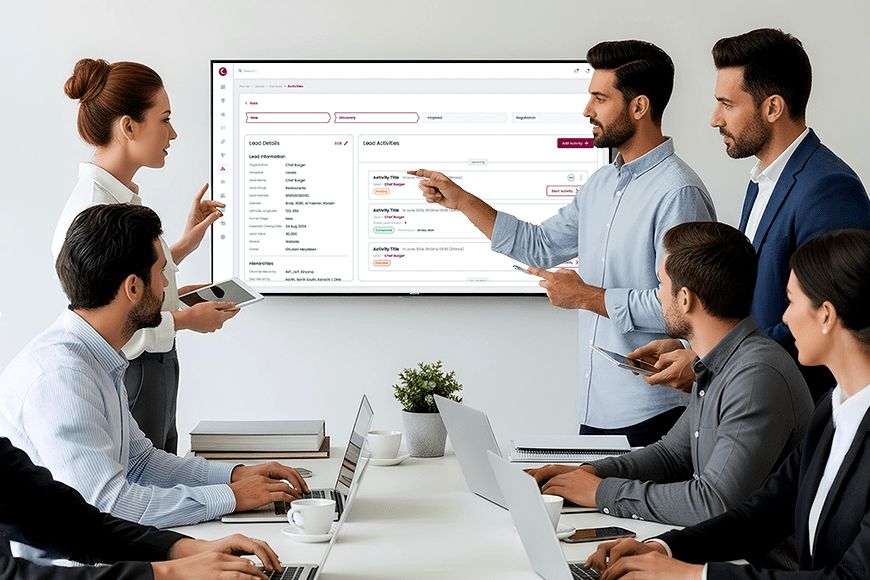
An agency provides hands-on capability to execute campaigns, generate creatives, and manage paid channels at scale. If your internal team doesn’t have the bandwidth to execute at pace, an agency bridges that gap quickly.
Match business goals to each model’s strengths. For instance, an early-stage product with fuzzy messaging is well-served by a fractional CMO that runs customer interviews, hones ICP, and lays out a GTM plan. A growth-stage company prepared to scale demand generation and conversion optimization frequently requires agency execution in addition to well-articulated strategy.
Use a simple table or list: goal to sharpen positioning leads to fractional CMO; goal to increase ad-driven leads by 50% leads to agency; goal to achieve both leads to hybrid.
Put together some kind of decision matrix or checklist to compare against culture, budget, long-term goals, and more. Add criteria such as strategic need, execution bandwidth, cost per month, time to value, and conflicts of interest.
Be mindful that some agencies receive commissions from third-party vendors, which can lead them to steer you toward partner tools or media buys that pay them more. Consider vendor incentives in your scoring to ensure you are not selecting to suit agency margins rather than your business.
Think hybrid and common mixes. Most companies mix and match a fractional CMO for oversight, a consultant for short-term guidance, and one or more agencies for implementation. This allows you to maintain strategic continuity as you scale work.
If you’re agency-first, be sure to have clear positioning and target customer definitions or you risk optimizing for the wrong metrics. If you recruit a fractional CMO, settle on deliverables and handoff plans so execution can soon follow.
Use data to decide: benchmark expected ROI, forecast costs in metric terms, and run short tests where possible. A pilot retainer of 3 months with transparent KPIs frequently uncovers the appropriate long-term model.
Conclusion
A fractional CMO delivers deep strategy, steady leadership, and a long-term perspective. A marketing agency offers broad skills, quick turnaround and pre-made teams. Use a fractional CMO to set direction, build the plan, and coach an in-house team. Use an agency for campaigns, skill gaps, and scaling work fast. For cash-strapped and control-freak circles, bring on a fractional CMO part time. For project bursts or reach to multiple experts, bring in an agency. One clear example is a $2 million startup that keeps a fractional CMO to set brand and growth plan and then hires an agency for paid media and content. Align the option with your objectives, schedule, and team. Let’s map your path! Book a quick call or run a fast audit to get a clear next step.
Frequently Asked Questions
What is the main difference between a fractional CMO and a marketing agency?
Fractional CMO vs Marketing Agency A marketing agency runs campaigns and provides services. The CMO emphasizes strategy and team alignment. Agencies emphasize tactical execution and deliverables.
When should I hire a fractional CMO instead of an agency?
Hire a fractional CMO when you need strategic direction, leadership, and cross-functional alignment and need that type of resource but can’t afford to pay for a full-time CMO. They are perfect for scaling companies who need a roadmap, hiring guidance, and governance.
When is a marketing agency the better choice?
Pick an agency when you require specific execution like ads, content, SEO, or creative production. Agencies are best for project-based work, campaign delivery, and skills you don’t want to cultivate in-house.
Can a fractional CMO and an agency work together?
Yes. A fractional CMO can pick and manage agencies. This arrangement keeps strategy and execution in sync and can boost ROI from agency labor.
How do I measure success for a fractional CMO versus an agency?
For a fractional CMO, measure strategic outcomes: revenue growth, marketing ROI, team performance, and roadmap milestones. For an agency, measure campaign KPIs: conversions, cost per acquisition, traffic, and deliverable quality.
What are common integration challenges with a fractional CMO?
Typical problems are fuzzy roles, bad communication, and no executive buy-in. Define responsibilities, reporting cadences, and success metrics upfront to prevent gaps.
How much does hiring a fractional CMO typically cost compared to an agency?
Fractional CMOs are priced on a monthly retainer depending on experience and hours. Agencies typically charge project-based, monthly retainers or media-spend percentages. Fractional CMOs typically cost less than a full-time CMO but more than small tactical agency engagements.