

Key Takeaways
- Fractional CMOs provide access to senior marketing guidance without the full expense of a permanent executive. This allows teams to scale expertise up or down and redirect savings to high-impact campaigns.
- Hire a fractional CMO to get immediate results from lightning audits, quick-win strategies, and faster onboarding that enhance campaign execution and sales enablement.
- Seek varied industry experience, a passion for data, and a great network so the fractional CMO can export tested tactics, vendor relationships, and metric-based best practices.
- Anticipate the impartial outside eyes that see what’s missing, challenge siloed thinking, and suggest objective tools, processes, and partnerships.
- Establish a clear scope, decision authority, communication routines, and performance metrics to ensure seamless integration and accountable results.
- Use a checklist that confirms industry acumen, cultural fit, quantifiable results, and mutually agreed upon short-term wins and long-term roadmaps before hiring.
To hire a fractional chief marketing officer means engaging a senior marketing leader on a part-time basis to guide strategy and execution. Firms get expert strategy, accountable campaign management, and savings compared to a full-time executive.
Standard responsibilities are brand strategy, KPI-setting, team coaching, and vendor management. Small and mid-size firms commonly tap into this model to ramp up marketing rapidly while maintaining budget agility and accessing senior-level expertise.
The Modern Dilemma
The modern dilemma captures this leader’s choice between slow and steady and fast and furious while juggling excessive options and incessant change. Businesses need to balance stability and experimentation with new channels, tools, and models. That tension manifests itself as decision paralysis, missing collective team skills, and a drive to project confidence even when information is scarce.
A pragmatic reply mixes fixed process with adaptive leadership that can learn as you go and embrace doubt.
- What fractional CMO services are, how they differ from full-time hires, and why that matters.
- Fractional CMOs operate on a part-time or consulting basis, providing executive strategy without the full-time expense. For a mid-size company, this can translate into a 20 to 40 hour-per-week marketing leader for a fraction of a chief’s salary and benefits, liberating budget for paid media or product experiments.
- They offer cross-industry experience, so they can identify what has worked in analogous markets and sidestep pitfalls. For instance, a fractional CMO who grew subscription growth at a SaaS company can translate those lessons to a new offering more quickly than an internal executive who does not have that experience.
- They minimize hiring risk. If strategy or culture fit is off, contracts end without the storm of an executive exit. That flexibility allows teams to evolve in times of rapid change or leadership requirements.
- Why companies can’t keep up with changing marketing trends and confusing strategies.
Digital channels change quickly: algorithm updates, privacy rules, and new ad formats alter performance. Small teams can’t figure out every change on the fly while doing day-to-day work. Hard strategies need cross-discipline coordination — data science, creative, product, sales — but most companies don’t have the senior bandwidth to tie these parts together.
That gap drags growth and burns spend on misaligned campaigns. Decision paralysis comes from too many vendor options and tools. Companies purchase platforms looking for fast results but have no strategy to guide their effective use.
- For the modern conundrum — flexible, scalable marketing leadership.
- A fractional CMO allows leaders to scale expertise up or down. Hire one to set strategy, develop a roadmap in months, then transition to an advisory role as the internal team implements.
- This model supports a learning culture. Teams collaborate with a mentor who instructs, provides structure, and anticipates iterative experimentation, capabilities that align with research demonstrating that learning enables us to better adapt to change.
- It reduces solitude. External leaders give brutal advice and bigger networks so you don’t feel trapped with your own small choices.
- via iSPYFINALIZED How fractional CMO services optimize spend and impact.
- They put high-return junk in front and low-worth junk very fast, and redirect budgets to tests with obvious metrics.
- They help balance tradition and innovation: keep reliable channels that fund experiments in new formats, rather than betting everything on unproven trends.
- They prompt leaders to embrace ambiguity, operate mini-bets, learn quickly, then scale.
The Strategic Advantage
The strategic advantage Fractional CMOs bring your firms the benefits of senior marketing leadership without the time and cost of a full-time hire. A brief overview of what this brings: expert-level strategy at a lower price, short engagements that still show results, quick onboarding in weeks not months, and broad experience drawn from multiple industries.
These things allow companies to respond more quickly to market changes and implement battle-tested strategies immediately.
1. Financial Agility
Hiring a fractional CMO can be significantly more economical than hiring a full-time executive. A full-time chief might command a six-figure salary plus benefits and equity. Fractional rates often run between $150 and $350 an hour, with per-hour, part-time, or fixed-term contracts — no hidden fees.
Businesses pay only for the hours and expertise they need, which allows them to manage marketing spend tightly and steer clear of sunk overhead. Savings from reduced payroll and recruiting costs can be reallocated to high-impact activities, such as paid campaigns, marketing automation, analytics tools, or agency retainers.
It generally takes four to six months to go through the hire process for a full-time executive. That delay alone can eat into product launches or seasonal sales windows. A fractional engagement, typically six to twelve months, strikes a balance between allowing time to demonstrate impact and controlling your budget.
2. Immediate Impact
Fractional CMOs can evaluate existing campaigns quickly and initiate improvements in a matter of weeks. They come with plug-and-play performance marketing, funnel, and sales enablement frameworks that deliver quick wins, such as higher lead quality, conversion rates, and faster campaign turnaround.
Onboarding is typically in weeks, not months, so launches stay on step with market opportunity. This speed matters where timing is strategic, such as a sudden market trend, a competitor move, or a funding milestone. Quick pivots based on hard evidence and strategic agility move the needle fast.
3. Diverse Expertise
Fractional CMOs come with playbooks developed across industries and sizes. They might translate a B2B demand-generation trick from software to a services firm or map retail conversion tests from one market to another. That cross-pollination delivers fresh ideas and proven techniques, reducing the risk of experimentation.
Above and beyond tactics, they reach into vendor and agency networks, which speeds execution and often gets them better deals. This diverse experience is at the heart of the increasing need for fractional leaders, which is up more than 40% in two years.
4. Unbiased Perspective
Outside leaders provide unbiased, evidence-based perspectives that internal teams sometimes overlook. A fractional CMO identifies gaps, challenges assumptions, and provides impartial tech and partner suggestions. They break internal silos and hone brand positioning based on evidence, not politics.
5. Scalable Leadership
You can scale involvement up or down as needs change. Fractional CMOs assist startups in navigating scale-up phases and can even assist enterprises in managing multiple brands or launches without distracting day-to-day teams.
Adaptive contracts imply firms change leader with no long-term lock-in.
Role Versus Reality
Role versus reality. There’s nothing like a clear view of what a fractional CMO does to set expectations and guide hiring. The role is supposed to infuse senior marketing strategy and leadership without the expense of a full-time executive. The reality often looks different: limited hours, competing priorities, and frequent pulls into tactical work. Knowing those gaps guides companies on how to use a fractional CMO effectively.
Misconceptions about limitations of part-time CMO roles versus full-time executives:
- Part-time CMOs can’t spearhead culture or long-term change — a lot do cultivate groups and pivot behaviors.
- They provide strategic advice — they frequently handle implementation and vendor relationships.
- Part-time implies low accountability — they can be held to KPIs and SLAs like a full-time leader.
- They have to write ads and design emails — most concentrate on strategy, while tactical work is done by others.
- They are not in charge — well-defined scopes and stakeholder alignment give them influence.
A fractional CMO can deliver transformative marketing leadership by establishing strategy, prioritizing investments, and aligning marketing to revenue. In reality, they tend to work 20 to 50 hours per month, about one to two days per week, strategizing, leading critical meetings, and clearing blockers.
For a small company needing a go-to-market plan, a fractional CMO can build a marketing framework from scratch, including target segments, positioning, channel mix, budget allocation, and measurable milestones. They then offload implementation to internal teams or agencies, monitor performance, and iterate on outcomes.
The role requires juggling. With such limited hours, fractional CMOs need to zero in on high-impact activities and avoid getting diverted into weekly ad reports or mindless content changes. If requested to give weekly ad performance updates, that derails strategy time and impedes momentum.
When tactical imperatives are unavoidable, this is best handled through either delegation or a short-term scope for the CMO to stay strategic.
Compare a fractional CMO to a consultant or agency: consultants often diagnose and leave a plan. Agencies execute specific campaigns. A fractional CMO blends both: they own the strategy and oversee execution across channels, ensuring cohesion between channels and long-term goals.
For instance, an agency to run paid search might increase short-term leads, but a fractional CMO makes sure the paid search is consistent with positioning, lead scoring, and sales follow-up. That alignment minimizes wasted spend and guides marketing to quantifiable business results.
It’s about managing stakeholder expectations. Establish deliverables, hours, and decision rights up front. Define what the CMO won’t do, such as being a daily copywriter or designing email templates, unless agreed to.
Finding Your Match
Finding the right fractional CMO starts with a well-defined brief of needs and objectives, typically through a discovery call to determine compatibility. Consider scope, weekly time commitment, which is usually 10 to 20 hours, deliverables, timeline, and budget.
Consider engagement models that include hourly rates ranging from $200 to $375, project-based, or monthly retainer fees between $4,000 and $20,000. A tough selection process makes success more likely, and when you do find your match, you are 98% likely to succeed.
Industry Acumen
| Qualification | Why it matters | Example |
|---|---|---|
| Sector experience | Speeds up market understanding | B2B SaaS CMO who scaled ARR in fintech |
| Customer insight | Guides messaging and segmentation | Ran CX research to lift conversion 30% |
| Competitive savvy | Focuses spend where it wins | Reallocated ad budget after competitor move |
| Regulatory knowledge | Avoids compliance pitfalls | Launched campaigns compliant with GDPR-like rules |
| Brand playbook | Keeps communications consistent | Built a playbook used across channels |
Test knowledge of market realities, customer behavior, and competitors by looking over old plans and requesting market audits they generated. Verify experience with industry rules, like privacy, ad limits, or product claims, by asking for examples of compliant campaigns.
Appreciate applicants who can demonstrate particular knowledge from top brands in related areas, not general promotional successes.
Cultural Alignment
Determine how the fractional CMO will mesh with your team by requesting samples of integrations with current marketing teams. Seek out a leader who cultivates cross-team work between marketing, sales, and product, and who can demonstrate a history of collaborative projects.
Check communication style: do they prefer written reports, weekly stand-ups, or live dashboards? Be sure they can adapt to your management structure. Fractional CMOs should be able to work under a CEO, a head of growth, or a board.
Cultural fit minimizes friction and accelerates output.
Proven Metrics
Require hard evidence of past performance using KPIs: revenue growth, CAC, LTV, conversion rates, pipeline influence. Request case studies with baseline metrics, actions, and measurable outcomes.
Demand a data-driven approach to planning, execution, and reporting. Sample dashboards or reporting cadences are helpful. Set expectations up front for tracking and optimization: what tools they use, how often they review results, and what triggers a strategy change.
Add reference checks and a short pilot where you can to test claims.
Structuring Success
Setting up the engagement structures expectations reduces risk. Start with a short scoping document that outlines responsibilities, decision boundaries, and escalation paths. Clarify if the fractional CMO owns strategy, approves budgets, selects vendors, or is simply advisory.
Note specific areas of authority: brand, demand generation, digital channels, product marketing, partnerships, and customer lifecycle. For subscription-based businesses with long sales cycles, incorporate stakeholder mapping to indicate where the fractional CMO can impact multi-decision maker processes.
Clear Objectives
- Short-term wins include a quick audit of paid media, low-hanging conversion fixes, lead routing cleanup, and a rapid 30-day backlog of high-impact fixes.
- Long-term strategies include brand positioning, scalable demand generation, sales and marketing alignment for complex deals, and digital transformation plans that span 6 to 18 months.
- Measurable goals include increasing qualified leads by X percent, shortening pipeline velocity by Y days, improving retention by Z percent, and lifting marketing-attributed revenue to a set share of overall sales.
- Roadmap: a 30-60-90 day plan that begins with discovery, moves to remediation and pilot campaigns, and then scales validated tactics with quarterly checkpoints and KPI reviews.
Seamless Integration
Onboarding should provide the fractional CMO system access, historical data, tech stack maps, and customer personas to accelerate discovery. Designate one executive liaison to manage approvals, scheduling, and inter-departmental follow-up so decisions don’t bog down.
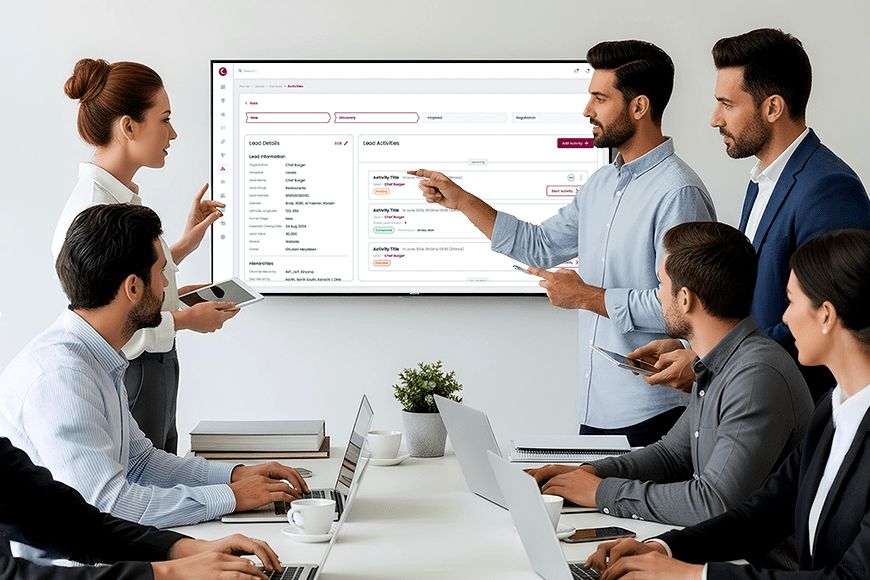
Incorporate regular check-ins, weekly at first and then every two weeks, to share status, surface blockers, and maintain momentum. Give budget sightlines and a minimum one team budget for quick tests. Provide mentorship time with in-house marketers so the CMO can raise capability as they lead.
Begin the engagement with a structured audit: tech, content, funnel, and sales handoff reviews. Deliver a formal Gap Analysis Readout to the leadership team within the first 30 days to focus priorities and exposure. This readout should emphasize quick wins, capability gaps, and recommended investments.
Performance Measurement
Build tracking in from day one. Select dashboards that display pipeline stages, conversion rates, CAC, LTV, and marketing ROI. Scorecards need to translate activities into business metrics, not vanity metrics.
Set a series of reviews at 30, 60, and 90 days linked to the initial plan and then a quarterly strategic review. Hold the fractional CMO accountable for specific outcomes: measurable pipeline growth, improved sales handoffs, or defined brand metrics.
A deep expert specialist can accelerate outcomes and guarantee cultural alignment. A misaligned senior hire can derail months of work. Use the 30-60-90 milestones and the Gap Analysis to protect against that danger.
Beyond The Honeymoon
The early excitement after hiring a fractional chief marketing officer often fades within months. Plan for ongoing evaluation of the fractional CMO’s fit and contribution to the organization by setting clear, measurable goals tied to business outcomes. Use quarterly scorecards with metrics such as lead volume, cost per lead, conversion rate, customer acquisition cost, and marketing-attributed revenue.
Complement metrics with qualitative checks: stakeholder interviews, team feedback, and review of campaign processes. Schedule regular review meetings and document progress and blockers so adjustments are based on evidence rather than impression.
Expect your business needs to change and scale the fraction CMO’s role and scope appropriately. Plan out near-term priorities for 3, 6, and 12 months, and tie those to how the fractional CMO will allocate time. Many fractional executives work part-time, often up to 20 hours per week, so break work into focused blocks: strategy, team coaching, vendor oversight, and hands-on execution.
If a scale-up requires rapid user growth, turn hours to acquisition and analytics. If retention matters more, shift time to lifecycle marketing and product marketing. Make any scope changes clear in a brief written addendum to the contract. That is how you avoid scope creep.
Create a culture of learning, innovation, and feedback to keep marketing performance high. Build a tiny experiment budget and demand hypotheses, success criteria, and learnings for every test. Hold short post-mortems that highlight what worked and what to stop.
Have the fractional CMO mentor internal staff and conduct mini trainings so expertise remains in-house. Make work visible across departments with shared dashboards and clear handoffs. This makes progress concrete and keeps teams agile to pivot without falling out of momentum. All of this helps maintain energy beyond the honeymoon.
Think about ways to extend, expand or evolve the fractional CMO relationship as the business scales. Discuss long-term options from the start: extend the part-time contract, increase hours, move to a retainer, or hire a full-time CMO when budget and need align.
Be realistic about cost: fractional CMOs commonly charge between 200 and 375 USD per hour. We used staged criteria for conversion to full-time, such as revenue thresholds, team size, or product milestones, to direct decisions.
If you anticipate a handoff, write down playbooks, processes, and vendor contacts so the transition is orderly. While fractional leadership can provide valuable new perspective, maintaining value requires creating systems that preserve the wins beyond the honeymoon phase.
Conclusion
Small teams get a roadmap, smarter campaigns, and consistent metrics that prove what works. Medium-size companies receive the additional brain power for launches, rebrands, or growth surges without a full-time employee. Employ an easy scorecard to align objectives, budget, and personality. Have short goals, review results often, and change scope as needs shift. Maintain regular check-ins and share key metrics. Test drive a three-month pilot on a critical campaign like a product launch or lead-gen push to experience the impact soon. Ready to look around? Begin by enumerating top objectives, budget range, and one large metric to monitor.
Frequently Asked Questions
What is a fractional chief marketing officer (CMO)?
A fractional CMO is a senior marketing leader who works part-time or contractually. They deliver high-level strategy, leadership and execution without the expense of a full-time executive. It’s perfect for scaling companies that require the expertise, but not a 40-hour-a-week hire.
When should my company hire a fractional CMO?
Hire when you need strategic direction, GTM planning, or team leadership but don’t have the budget or need flexibility. Common triggers include scaling, product launches, or marketing underperformance. They bridge the gap until you can support a full-time CMO.
How does a fractional CMO deliver value quickly?
They evaluate holes, triage impact efforts, and establish tangible KPIs. Anticipate quick wins in positioning, funnel optimization, and budget reallocation. Their experience accelerates decision-making and minimizes expensive errors.
How is a fractional CMO engagement structured?
Engagements vary: monthly retainers, hourly blocks, or project-based terms. See if you can establish scope, deliverables, and reporting upfront. Clear milestones and flexible exit clauses protect both parties and keep focus on outcomes.
How do I find the right fractional CMO for my business?
Seek out sector experience, demonstrated success, and cultural compatibility. Request case studies, references, and a 30-60-90 day plan. Look for a clear communicator who fits your growth goals.
What are common pitfalls when hiring a fractional CMO?
Ambiguous scope, unrealistic expectations, and inadequate onboarding. Sidestep by providing clear objectives, granting data access, and securing team buy-in. Check-ins keep the relationship productive.
Can a fractional CMO transition to a full-time role?
Yes. A lot of fractional CMOs step into full-time roles as budgets and needs warrant. Try a trial period and performance milestones to check for fit before committing.