

Key Takeaways
- Know your leads. Analyze the behaviors, interests, and motivations behind the leads you generate to identify quality prospects and customize your method.
- Segment and qualify leads based on demographics, behavior, and psychographics so you can deliver relevant and personalized communications and marketing.
- See buying signals, like website or content downloads, so you can time your follow-up and optimize your conversion chance.
- Gain the trust of potential clients through honest communication, informative materials, and persistent follow-up to build your credibility.
- Utilize technology, such as CRM and marketing automation software, to optimize your lead management workflow.
- Keep measuring results with transparent metrics. Find bottlenecks and optimize.
To convert leads to clients, a business must establish trust, address needs, and demonstrate obvious value at every step. By keeping it open and simple, leads feel at ease. Fast answers, real conversations, and providing valuable information are what count.
Simple shifts, such as following up or providing explicit next steps, can make a huge difference. The following sections dissect the crucial methods to transform leads into actual clients.
Understand Your Lead
What transforms leads into clients begins with treating each lead as a real person. A straightforward, sincere voice and an unambiguous message establish credibility immediately. Not all leads are created equal; only 1 in 25 is ready to buy now. The majority require nurture, attention, and the appropriate strategy.
Knowing how to recognize top leads and what they care about allows you to focus your efforts where they will have the most impact.
Qualification
The initial step is to see if a lead matches your perfect client profile. Check out their title, company size, and needs that align with what you are offering. Businesses with a lead scoring system, for example, assign points for something as simple as opening an email or requesting a quote.
When you set a threshold, you can instead concentrate on those most likely to convert. Budget is important as well. If a lead’s budget doesn’t align with your price, it’s difficult to proceed.
Ask questions that indicate if he’s really interested. If they respond quickly and request additional information, that’s a positive indicator. Brief or ambiguous responses could indicate they’re merely looking.
You can see how much effort a lead expends in educating themselves about your service. The harder they try, the more likely they’re serious. For B2B sales, it is a slow process and requires more than one conversation.
Taking notes of follow-ups and seeing you respond quickly, within an hour if possible, improves your chances! Every step helps demonstrate you care and helps you identify who is genuinely ready to purchase.
Segmentation
Leads are all over the place and come from all sorts of backgrounds, so segmenting them makes sense. You can categorize them by age, occupation, or location. This makes your message more personal.
Grouping by behavior is more revealing—do they always open your emails or share your posts? This allows you to customize your pitch to what’s important to them. Psychographics add an additional dimension.
This is where you examine what motivates a person. Perhaps they are time savers or price-driven. When you know this, it’s easier to speak in a way that resonates.
- Demographic: Age, job role, industry, location
- Behavioral: Repeat website visits, content downloads, purchase history
- Psychographic: Risk-takers, bargain-hunters, quality-seekers, early adopters
Buying Signals
Know your lead. If they hit your pricing page more than once or download a guide, they may be ready for a more in-depth discussion. Even small actions like clicking links in emails or responding to a social post can demonstrate genuine interest.
Record these activities and schedule follow-up reminders. Software helps you identify trends and respond quickly. Timing is everything.
Get to them when they’re the most interested, and you’re most likely to win them over.
The Conversion Blueprint
Conversion Blueprint: A step-by-step guide to moving leads through the sales funnel. It begins with lead qualification, verifies which prospects are the most probable to purchase, and ensures every step is transparent and monitored.
It is this mapping of the buyer journey that helps you identify what leads need during awareness, interest, decision, action, and retention stages. A checklist keeps the team on track, and syncing marketing and sales makes the process seamless for leads and clients.
1. Initial Contact
Begin with a fast-attention-grabbing outreach email. Try a straightforward subject that addresses the lead’s primary need or challenge. Make it personal—refer to the lead’s business or recent work so it reads as direct.
A timely, personable follow-up keeps the lead warm and demonstrates you respect their time. Don’t depend solely on email. Use phone, social media, and even messaging apps if the timing is right.
This combination provides you additional opportunities to engage. Reply promptly because rapid responses establish trust fast.
2. Nurturing Sequence
Nurturing campaign helps leads see the true value of your offer. Send useful content over time: guides, case studies, or short tips. Justify their worries, such as expenses or how your service addresses an issue.
Send brief emails or straightforward infographics so leads do not get overloaded. Automated reminders that keep conversations going without spamming.
Observe lead engagement, such as clicks, replies, and downloads, to determine effective content and adjust accordingly. If a lead is more active, provide additional information or an exclusive deal.
3. Personalization
Speak with each lead individually according to their needs. Use their name, their industry, or a recent challenge they’ve experienced. CRM data informs messages and offers.
Dig through your old chats and emphasize things they mentioned. This makes your approach feel authentic and unscripted. Leverage your knowledge to propose services that align with their objectives.
Each message should read as if it were written to that one person.
4. Building Trust
Include feedback from happy customers or even real case studies to demonstrate you provide results. Be transparent in each transaction—don’t obscure pricing or conditions.
Follow up on questions and send updates even if there’s no news yet. Provide useful content that either tackles challenging questions or has explanatory value about what you do.
If leads regard you as a mentor, not merely a marketer, they will be more inclined to believe.
5. The Proposal
Keep your offer straightforward. Focus on how your service aids their primary concerns. Offer options that suit the lead’s situation, not just generic options.
Demonstrate what differentiates you. Perhaps it’s price, assistance, or quickness. Make it simple with a table or chart if necessary, so it’s just as easy to scan.
A great offer gets the lead from ‘maybe’ to ‘yes.’
Leverage Technology
Turning leads to clients can be one of technology. Digital technology can accelerate the process, reduce manual labor, and provide your team with a competitive advantage. With the right mix of automation, analytics, and management platforms, teams can respond faster and make data-driven decisions.
Below, we break down the primary methods of employing technology to shift leads along the sales trajectory with greater precision and reduced waste.
Automation
Automating routine tasks such as sending emails, scheduling follow-ups, and updating records reduces errors and enables sales teams to concentrate on cultivating stronger relationships. For instance, automated emails or text messages can ‘poke’ prospects at regular intervals, ensuring that nobody falls through the cracks.
If you’ve got lead scoring configured in your system, the hottest leads get seen first, giving your team time where it counts. Research shows that a quick callback within a couple of minutes increases your chances of a sale by four times.
Follow-up sequences controlled by automation allow you to nurture prospects well beyond the initial outreach. Given that 80% of sales require a minimum of five follow-ups to close, automation enables you to make this process more dependable.
Chatbots can answer questions any time of the day, ensuring that leads get fast responses, particularly since a lead is eight times more likely to convert if you engage them within five minutes. Manual handling simply cannot guarantee this speed and consistency.
CRM Systems
A CRM (customer relationship management system) is the backbone for capturing leads and tracking all interactions. Centralizing data keeps your entire team in the loop and reduces confusion and dropped balls.
Many of these CRMs have analytics built in, so your team can see which tactics work the best and where to improve. Tailoring the CRM to your sales process, for instance, by adding custom fields or alerts, helps you identify trends and respond quickly.
Rules within CRM automation enable your team to reach out to potential clients at the right moment. With most buyers doing their own research prior to engaging sales, having interactions recorded helps teams respond with context and confidence.
CRM analytics can reveal how effectively your conversion strategies are performing, providing actionable figures rather than speculation.
| Software | Key Features | Price (USD/month) | Pros | Cons |
|---|---|---|---|---|
| HubSpot Sales | CRM, automation, analytics, email tracking | Free–$50+ | Easy to use, strong integrations | Features limited on free plan |
| Salesforce | Custom workflows, lead scoring, reporting | $25–$300+ | Highly customizable, robust tools | Steep learning curve, costly |
| Zoho CRM | Omnichannel, automation, analytics | $14–$52 | Budget-friendly, scalable | Interface less intuitive |
| Pipedrive | Visual pipeline, automation, reporting | $15–$99 | Simple layout, fast setup | Fewer advanced features |
| Freshsales | AI insights, workflow automation, chatbots | $15–$69 | Good AI tools, flexible pipelines | Limited integrations |
The Human Element
It’s the human element that crafts the sales process. In a world where people are more cautious, educated, and wary, the human touch can be the difference between a lost lead and a lifelong client. Research proves that by shifting your emphasis to assisting customers, not selling, you can increase conversion by 70%.
Buyers complete much of their research before they ever reach out, so every touchpoint matters. Since the vast majority of leads are not ready to make a purchase—roughly 73%—meaningful engagement counts. Quick, human touches like a two-minute callback can increase the odds of a sale by four times.
Building trust and rapport aren’t just nice-to-haves; they’re a must in a world with short attention spans and high expectations.
Empathy
Listening is the foundation of empathy. When sales teams hear what leads say, they discover fears and desires. This creates a genuine connection. Many people are hesitant or anxious about new services or products, so it’s helpful to say things like, “I understand how this is a hard decision,” or, “A lot of people feel that way.
This demonstrates the customer is listened to, not just marketed at. Open-ended questions can help discover more, such as “Can you share what’s most important for your team at the moment?” Considered responses, even to minor questions, demonstrate respect for a lead’s time and consideration.
Using language that is connected to the lead’s world, such as “We know time is scarce for many companies,” establishes rapport.
Authenticity
What you provide play it straight is important. Nobody wants a hard sell or empty promises. Transparent reality about the human element is what builds trust. They can smell a phony pitch.
Groups that drop the scripts and speak like genuine humans post even better outcomes. Sharing a personal story, such as the moment you fixed a client’s problem, can help leads connect to you and your brand. All companies have principles.
When these values join the conversation, they attract clients who share the same mindset. For example, if your brand is all about putting people first, discuss how you assist customers and not just what you market.
Storytelling
Stories make thoughts stick. Sixty-five percent of us are visual learners, so utilizing simple graphs or actual photographs makes a difference. For instance, showcasing before and after shots or sharing a quick client’s results might be all it takes to transform a lead into a client.
Good stories aren’t simply about your product; they are about how the story fits into the prospect’s life. They want to hear how other people have cracked the same nuts. Telling a brief anecdote about another person who shared this need and found success makes your proposal tangible.
Use copy and pictures that translate across multiple cultures and keep it simple. Everyone encounters more than 11 things before they purchase, so stories have to be remarkable and relevant.
Measure Performance
Tracking your lead-to-client conversion rate is essential if you want to stay ahead. Measuring performance allows you to make intelligent, data-driven decisions. It identifies for you what works, what struggles, and where your process crumbles. Just 2% or so of visitors convert to clients on their first visit to your site, so you’ve got to observe and adjust.
About measure performance. Setting benchmarks and tracking them keeps your team focused on real progress.
Key Metrics
Conversion rates tell you if your strategies are effective. For example, if you notice your conversion rate fall after a new campaign, that’s a cue to examine what changed. Lead engagement, like whether they opened your email or the time on page on your site, demonstrates whether they actually care about your message.
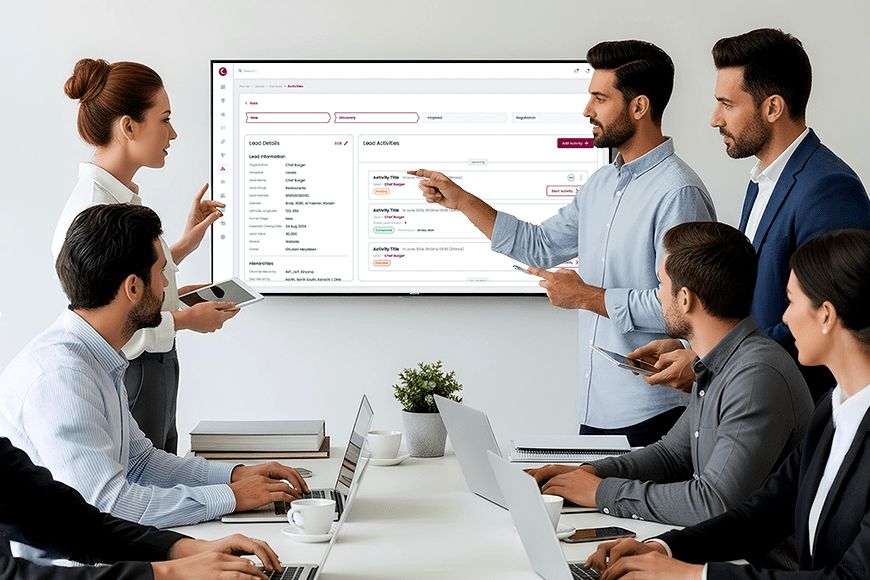
If engagement is low, your outreach may not align with what leads require. Measure the lead cycle or how long it took to turn a lead into a client. Shorter cycles can lead to a smoother process, but if things stall, look for holes or bottlenecks.
Having a clear definition of what makes a lead “qualified” saves you from wasting time. If you don’t create clear rules, you can’t know if you’re tracking the right people. Lead scoring, for example, helps rank leads by their likelihood to convert, so you can focus energy where it counts.
External forces like market changes or customer behavior can induce abrupt changes in outcomes. That’s why you want to look at trends, not just data points.
- Key Performance Indicators (KPIs) to monitor:
- Lead conversion rate.
- Lead engagement score.
- Time to convert.
- Count of qualified leads.
- Cost to acquire a customer.
- Length of sales cycle.
| Month | Conversion Rate (%) | Avg. Lead Engagement | Time to Convert (days) | Qualified Leads |
|---|---|---|---|---|
| January | 2.1 | High | 15 | 120 |
| 2/ | 1.8 | Med | 18 | 110 |
| 3 | 2.4 | High | 14 | 130 |
| April | 2.0 | Low | 20 | 105 |
Bottleneck Analysis
Identifying where leads bog down in your sales funnel addresses weak points. If most leads fall off after a sales call, that could indicate your pitch needs polishing or the offer doesn’t align. Data from each step helps you see where drop-offs occur most.
Focusing solely on one or the other provides an incomplete view. For instance, if new leads cease responding to follow-ups, audit your messaging and cadence.
When you discover a bottleneck, experiment with new ideas to correct it. This might require adjusting how you qualify leads, tweaking outreach, or simplifying your process for clients. Ensure sales and marketing alignment.
This maintains crystal-clear messages and a silky-smooth funnel from beginning to end. Measure results after each modification so you know if things get better or if you need to try something new.
Check your process frequently. Market trends and customer needs shift, so routine checkups ensure you spot issues before they get big. This helps keep your sales funnel robust and customers flowing.
Avoid Common Pitfalls
Turning leads into clients requires a strategy and keen attention. Too many teams cheat themselves out of growth, not because they’re short on leads, but because simple-to-avoid errors hinder their momentum. Identifying these holes early can help maintain a robust and flowing pipeline.
Identify the telltale signs of conversion-killing marketing. Putting all your eggs in one basket can be risky. If that channel shifts or fails, lead flow can dry up quickly. For instance, if all your traffic is from a single social network and the algorithm changes, your reach can plummet overnight. Multi-channel—email, social, search, etc.—provides more balance and a better chance.
Another indicator is if leads get stuck at one funnel stage and never progress. This might be because your message doesn’t align with what people are looking for, or you have a multi-step process. Frequent check-ins with sales and marketing teams can spot these problems early. Applying the same conversion rate across all campaigns or industries will mask vulnerabilities. It’s wiser to measure every contact point and identify where your leads fall off.
Don’t forget the follow-ups! A ton of leads go cold if they don’t hear back shortly after expressing interest. Fast responses demonstrate that you’re attentive to their concerns and respectful of their time. A quick email or message within 24 hours can mean a world of difference.
Not every lead wants to buy immediately, so timely helpful updates or reminders keep your brand top of mind. Teams collaborate to ensure that no message falls through the cracks. Staying up to date and sharing what works closes more deals.
Ditch the cookie-cutter messaging that turns off prospects. They want to feel heard. A message that works for everyone works for no one. Instead, develop a sharp buyer’s persona — their job and industry, their pain points, and what they are trying to mend.
Customize your pitch for each group and use language they’d use. For example, a tech buyer who cares about speed and safety, or a small business owner who might worry about cost and support. Listening to what leads say in calls or emails helps you shape a message that fits their needs.
Learn from history in order to never repeat it. Markets can change and what works today may not endure. Look back at closed deals and lost leads to identify what patterns emerge. If leads fall out at the decision stage, perhaps the offer or timing requires adjustment.
Pass this feedback along to your team and revise the sales process. Make sure your funnel covers all stages: awareness, interest, decision, and action. Be open to new tools and platforms as they emerge, and keep testing to see what works best.
Conclusion
Getting leads to sign on as clients requires more than luck. Specific steps, straight talk, and rapid execution work best. Utilize tools to track your progress. Make it human. They want to feel visible, not just marketed to. Check what works frequently. Drop whatever drags you. Experiment with a combination of calls, emails, and quick check-ins. Demonstrate that you understand your lead’s needs. It creates trust and maintains momentum. Every step you take creates an actual connection. See what works for your style and your clients. Want results? Do it with straight talk, practical tools, and real. Keep studying and experiment with new methods. Watch the transformation as you expand your client base.
Frequently Asked Questions
What is the first step to convert a lead into a client?
Get to know your lead. This enables you to provide customized solutions and establish credibility, which boosts the likelihood of conversion.
How can technology help in lead conversion?
Technology automates and tracks interactions and follow-ups. This accelerates your sales cycle and keeps no lead left behind.
Why is personalization important in lead conversion?
Personalization makes leads feel special. Speaking to their unique needs raises engagement and trust and makes it more likely to convert.
What metrics should I track to measure lead conversion success?
Measure things such as conversion rate, response time, and customer acquisition cost. These data points tell you what’s working and what must be fixed.
What are common mistakes to avoid when converting leads?
Stay away from impersonal drivel, tardy replies, and forgetting to follow up. These errors cost leads interest or a competitor.
How can I make my follow-up process more effective?
Tap into timely, relevant, personalized messages. Automated reminders and clear calls to action ensure leads stay engaged and interested.
How do I balance technology and human interaction in lead conversion?
Pair automated tools for efficiency with authentic human interaction. This method cultivates relationships and solves individual lead issues.