

Key Takeaways
- A part-time CMO provides strategic marketing leadership to drive growth while keeping executive costs lower than a full-time hire. This model is suitable for businesses seeking expert direction without heavy overhead.
- Focus on clear objectives and measurable KPIs so the part-time CMO can translate business goals into aligned marketing plans, establish a roadmap, and produce data driven results.
- Embed the fractional CMO into leadership cadence with clear autonomy, regular check-ins, and an internal point person to keep things moving and ensure the impact is quicker.
- Leverage the fraction to create internal capability through mentorship, repeatable systems, and scalable processes that train the team and develop leaders for the future.
- Stretch budgets by auditing spend, shifting resources to high-ROI channels, and tracking performance with dashboards to cut waste and improve marketing productivity.
- Track success by revenue growth, lead velocity, customer acquisition metrics, and brand equity studies while optimizing tactics in an ongoing feedback loop with data.
A part-time CMO for growth is a senior marketing leader who’s hired on a flexible basis to create revenue-generating activities and scale. They set strategy, align teams, and track KPIs like CAC and LTV.
Small and mid-size firms use them to get senior expertise without full-time cost. Typical engagements last from several months to a year and concentrate on product-market fit, channel mix, and measurable growth plans.
The Growth Catalyst
A part-time CMO is a growth catalyst, providing strategic leadership that directs marketing toward tangible business results. This role is valuable for startups and mid-size companies that require senior-level expertise, but can’t afford the $200,000+ per year cost of a full-time executive.
The catalyst hones in on a handful of big-impact levers you can quantify and tweak, while still getting in the trenches with teams to help set strategy and execute campaigns.
1. Strategic Direction
Build a concrete marketing strategy that connects to business goals and market opportunities. Leverage data and trend analysis to select target segments, pricing signals, and channel mix appropriate to the company stage.
Define clear objectives such as lead volume, conversion rate, and lifetime value. Chart a timeline with milestones connected to revenue or customer metrics.
Be the growth catalyst. Talk to customers, review product-market fit, iterate the gift-and-go to market plan, and make sure every activity is converging toward the long-term strategy.
For example, prioritize a content and paid-social mix for demand generation in early growth. Then shift to retention and upsell as unit economics improve.
2. Team Mentorship
Mentor junior marketers and internal staff to improve team skills. Provide ongoing coaching, campaign feedback, and exemplify decisions under uncertainty.
Rotate tasks to fit strengths, freeing senior staff to think strategically while juniors conduct experiments. Construct your leadership pipeline.
Design stretch roles and quantifiable development plans. In practice, a part-time CMO could hold weekly office hours, review creative briefs, and conduct a quarterly skills audit to close gaps.
3. System Implementation
Incorporate scalable workflows and technology to reduce friction and increase production. Drive CRM rollouts, configure marketing analytics, and standardize campaign templates so results can be measured and benchmarked.
Establish a shared playbook that captures campaign flows, naming conventions, and reporting cadence. Build tracking that answers tough ROI questions.
If the company spends €10,000 a month on marketing, what are they getting back? This provides uniformity across channels and simplifies scaling.
4. Budget Optimization
Audit existing spend to eliminate leaks and redirect funds to higher-return activities. Balance spend between digital ads, content, and product-led growth according to metrics and stage.
Invest in experiments and shield core channels that fuel consistent returns. Track spend weekly and reallocate as data depicts shifting performance.
5. Data-Driven Decisions
Let analytics and market research direct decisions and polish strategies. Monitor KPIs such as engagement, funnel conversion, and ROI.
Establish feedback loops to fast-track campaign optimization. Be both a strategic advisor and a hands-on executor, taking insights to discover new market opportunities and pivot strategy on the fly.
Is It Time?
Determine if your marketing leadership needs immediate injection to set things right, close skills gaps and accelerate growth. Examine current results, team size, spend trends and leadership strain. The questions below assist in determining if a part-time CMO, also known as a fractional CMO, is the right decision for the moment instead of full-time.
Stagnant Growth
Growth stalls even with steady activity is a dead ringer. If leads, conversion, and LTV have flatlined for months despite campaigns, that means strategy and execution gaps. A business with less than 10 marketers rarely has the bench strength to redesign strategy and conduct experiments at scale.
Now, compare your revenue growth to industry benchmarks. Companies with a CMO outperform their peers by approximately 15%. If you’re really falling behind, maybe you’re lacking some of that strategic input.
Common causes and solutions:
- Targeted to a smallish audience. Expand the segmentation and experiment with new ICPs.
- Poor conversion funnels lead to re-designing journeys, better analytics, and A/B tests.
- Siloed teams bring strategy and KPIs under a fractional CMO.
- Bad product-marketing fit leads to quick market experiments and repositioning.
- Insufficient measurement → implement unified dashboards and attribution models.
Lacking Leadership
Symptoms of leaderlessness are ambiguous priorities, campaign by crisis, and fuzzy KPIs. Groups that continually blow deadlines or hunt down tactical work are doing so in the absence of a leader who defines the strategy.
Leadership voids damage morale and retention is difficult. It takes time to recruit senior hires and you can lose momentum. A fractional CMO provides executive-level strategic planning and mentorship while being cheap enough for smaller teams to afford.
They can hold quarterly strategy sessions, coach mid-level managers, and establish KPIs so the team marches with purpose.
Inefficient Spending
Review budget lines to identify expenditures that aren’t connected to results. If marketing spend increased by approximately 10% over 12 months but the revenue lift didn’t come close, look at leadership again.
Below is a simple channel spend versus outcome view:
| Channel | Spend (USD) | Primary Outcome | ROI Indicator |
|---|---|---|---|
| Paid search | 40,000 | Leads | CPA high, low conversion |
| Social ads | 30,000 | Awareness | Low conversion, high reach |
| 10,000 | Retention | High ROI, low spend | |
| Content | 15,000 | Organic traffic | Slow lift, long-term gains |
A fractional CMO can shift budget to higher ROI channels, establish measurable KPIs, and eliminate wasteful programs fast.
Scaling Challenges
Operational bottlenecks often block scaling. Slow campaign approval, poor onboarding for new channels, or lack of repeatable processes hinder progress.
Figure out which existing workflows would support doubling customer volume or entering new markets. Frequent launch issues include lackluster creative, missing localization, and no analytics.
A fractional marketing exec can build scalable functions, such as templated playbooks, vendor rosters, and governance, so the team can scale without shattering operations.
Maximizing Impact
Maximizing impact. Part-time CMOs provide strategy and do hands-on work to drive growth. Help them set goals, define roles and construct clear channels so their limited hours are spent on highest-return activities. Here are action items to make sure a fractional CMO propels the business forward quickly and with consistency.
Clear Objectives
Establish clear, business-related goal metrics. Work backwards from lead generation counts, sessions on your website, conversion or customer engagement scores, ROI goals, and more. Connect every marketing objective to a business goal, such as 20% more qualified leads associated with an upcoming launch or €50,000 in additional quarterly revenue from a pricing adjustment.
Prioritize initiatives by expected impact and time to value. Focus first on low-cost, high-return moves like landing page optimization, paid search refinement, or email nurture flows. Use a checklist to track milestones: goal, metric, owner, timeline, and status.
Add cadence for review and a simple RACI to prevent overlap. T-shaped candidates with track records that they can demonstrate fill strategy holes and do key things, minimizing ramp time.
Seamless Integration
Get the team ready before the fractional CMO arrives. Share a quick brief on current plans, metrics, tech stack, and key people. Make formal introductions with the executive group and functional leads so the CMO understands cross-functional constraints and opportunities.
Designate a point person, typically the head of marketing or COO, to coordinate onboarding, share documents, and funnel questions. Integrate your fractional CMO into weekly leadership and product roadmap meetings to help keep strategy connected to execution.
Market research and any existing performance data should be provided early so the CMO can triage, tweak structure, and generate a first 30, 60, 90 plan.
Open Communication
Plan weekly tactical check-in and monthly strategic reviews with senior leadership. Promote frank feedback regarding campaign performance and strategic direction and record decisions to eliminate ambiguity.
Take advantage of common tools — project boards, dashboards, and cloud docs — to share updates, results, and next steps. Encourage a culture where little failures are documented and internalized and victories are broadcast immediately.
Such transparency accelerates course corrections and enables the part-time CMO to time-shift work intelligently across the priorities.
Defined Autonomy
Define what decisions the fractional CMO is able to make without further sign off. Let them run certain things, such as vendor picks, campaign spends under a mutually agreed cap, and hiring contractors, while providing guardrails for brand, legal, or long-term capital commitments.
Formalize roles, responsibilities, and decision boundaries in a contract or job description. Select the engagement model that best fits needs, whether hourly, part-time retainer, or block days, which allows for keeping costs flexible and measurable.
Measuring Success
To measure success, start with clear goals and a set of KPIs that connect to the firm’s growth plan. Select metrics that mirror the original goals of the part-time CMO engagement so measurement is meaningful and accurate. Dashboards or scorecards put progress in plain sight and focus teams on the few metrics that matter.
Revenue Growth
Measure sales and topline revenue increases that can be connected to marketing activity. Attribution models can help parse which specific campaigns, channels, or offers contributed to revenue and compare these to pre-fractional CMO baseline figures.
Decompose revenue by product line, region, or customer segment to identify where marketing had the biggest impact. Establish quarterly revenue targets based on the strategic plan and monitor them at monthly performance meetings to identify shortfalls early.
Lead Velocity
Measure the pace at which it’s producing new leads and moving them through the funnel. Track lead volume week over week and calculate lead velocity rate as a leading indicator of future sales.
Track conversion rates at every phase, MQL to SQL, SQL to opportunity, and opportunity to closed, so you can identify where leads get stuck. Test to eliminate bottlenecks, whether it’s your landing page forms or your follow-up sequences.
Benchmark lead velocity against others in your industry and size to establish realistic expectations.
Customer Acquisition
Measure success by figuring your CPA and CLV to gauge efficacy and ROI. CPA by channel includes search, social, referral, and partner. Shift spend toward lower-CPA or higher-CLV channels.
Look at multi-touch attribution to understand how early-stage content drives later conversions. Employ cohort analysis to verify whether customers secured under the fractional CMO exhibit enhanced retention or spending habits.
Successful campaigns that moved the needle often include:
- Targeted paid search linked to specific landing pages and offers.
- Email nurture sequences converting free trials to paid plans.
- Partner co-marketing that delivered qualified leads at scale.
- Content series that improved organic traffic and demo requests.
Brand Equity
For example, track brand awareness, brand perception, and brand loyalty with a combination of both quantitative and qualitative metrics. Monitor social engagement rates, sentiment, and share of voice to detect changes in perception.
Measure changes in market share if possible and against competitors to know if your positioning efforts worked. Conduct brief brand tracking or NPS surveys every quarter to measure changes in recall and affinity.
Cross-reference survey results with traffic, engagement, and conversion data to paint a broader picture of brand impact than the raw numbers alone.
The Fractional Mindset
The fractional mindset Fractional CMO engagement starts with a mindset that values long-term growth and durable systems more than short-term wins. This mindset views leadership as a collection of focused, high-value activities provided on a variable schedule. It is about constructing repeatable processes, precise measurement systems, and strategic priorities that transcend any single campaign.
The following three sections describe how that mindset manifests in practice.
Objective Perspective
Fractional CMOs provide that outsider lens to challenge core beliefs. They contrast internal assertions with market evidence, customer input, and competitor actions to provide an objective sense of what is effective and what is not.
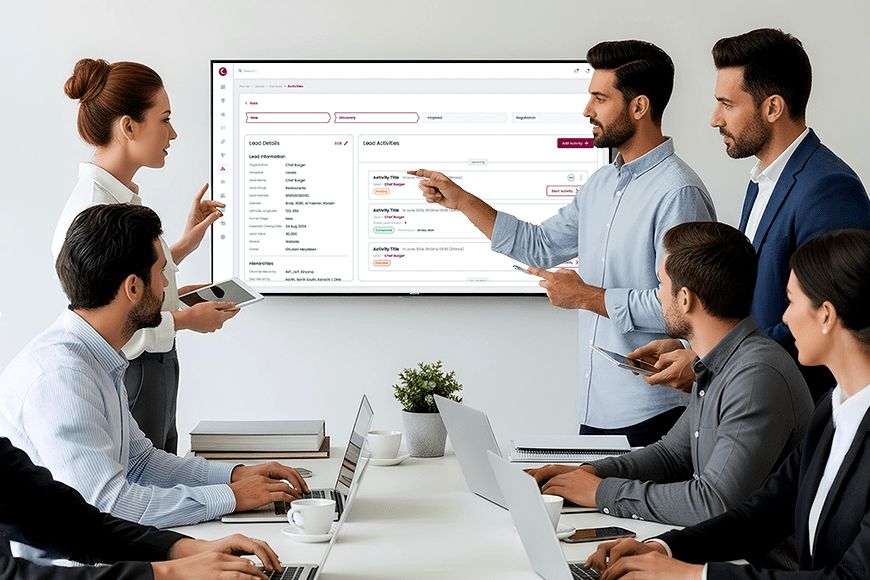
This perspective exposes holes such as disappearing customer segments, weak value propositions, or bad channel mix that internal teams can overlook due to their proximity to daily delivery. A fractional CMO will identify these gaps, prioritize them by potential impact, and suggest targeted experiments.
They apply patterns, heuristics, and quick tests to ensure their choices are less about emotion and more about being data-driven. That assists teams in shifting from belief-based decisions to decisions based on quantifiable benchmarks.
Focused Execution
Execution revolves around a brief list of high-impact projects connected to specific metrics. A fractional CMO will select three to five priorities—lead generation, conversion rate lift, product market fit tests—and create a single dashboard to measure progress.
Non-core work gets pushed aside. The fractional mindset allows routine campaign builds, reporting chores, and low-value creative tasks to get delegated to internal staff or specialist agencies so senior effort stays on strategy and optimization.
Periodic check-ins keep accountability close. Weekly sprint reviews, monthly KPI reviews, and quarterly strategy refreshes ensure the selected initiatives continue to move and that lessons get folded back into planning.
Focused execution means preventing scope creep. It means selecting mini experiments that scale when they pan, staying work connected to income or strategic value.
Agile Adaptation
A fractional mindset anticipates change and plans for it. Teams establish short feedback loops so tactics adapt to real-time results and market changes. If a paid channel spikes in cost, budgets move to lower-cost channels within days, not months.
Scaling is deliberate: double down where unit economics work, pull back where they don’t. That enables companies to scale marketing spend sustainably, tied to business metrics instead of gut calls.
This mindset creates a learning culture. Post-mortems, quick tests, and playbooks make it possible for teams to continue improving while remaining nimble in uncertain markets. It weighs short-term quick fixes and long-term strategies so decisions satisfy both the here-and-now and build future robustness.
Common Pitfalls
Hiring a part-time CMO can accelerate growth. It introduces specific dangers that startups need to navigate, too. Here’s a concise table that summarizes typical pitfalls and pragmatic mitigations prior to further elaboration.
| Pitfall | Why it happens | How it shows up | Mitigation |
|---|---|---|---|
| Misaligned expectations | Vague scope, hourly billing, or unclear KPIs | Missed deadlines, scope creep, stakeholder friction | Define goals, deliverables, and success metrics in writing |
| Poor integration | Limited access to teams, data, or meetings | Delays, duplicated work, low team buy-in | Include CMO in ops, grant data access, assign liaison |
| Short-term focus | Pressure for quick wins or pay-per-hour incentives | Tactics over strategy, fragile growth | Require multi-year roadmap, balance quick wins with strategy |
| Over-commitment | CMO handles many clients | Divided attention, late responses | Limit client load; set guaranteed hours |
| Budget fixation | Hiring only for lowest rate | Poor fit, low impact | Evaluate experience, fit, and outcomes, not just price |
| No ownership | Short contracts, easy exit | Low investment in company success | Use milestones, retention clauses, tied incentives |
Misaligned Expectations
Establish defined objectives and outputs. Put milestones, hours, and KPI targets in the contract. Define what “done” looks like for campaigns, content, and strategy work.
Reporting cadence for the states and what data you will share. This sidesteps the hourly trap in which work expands to fill time.
Be upfront about role and involvement. Specify if the CMO is going to lead the team, consult, or roll up his sleeves. Inform the marketing team and executives of the extent, so all are aware of who determines budget shifts or campaign pivots.
Achieve stakeholder alignment. Run a kickoff with execs, sales, and product to agree on priorities. Capture disagreements early and log decisions so they can’t be forgotten.
Record shared comprehension to minimize subsequent conflicts.
Poor Integration
Bring the fractional CMO into the appropriate meetings from day one. Weekly leadership meetings and monthly performance reviews are good.
Provide them calendar access and clear points of contact. Just give them the resources and information required through CRM, analytics, and customer research.
Lacking these, the CMO guesstimates and progress sputters. Knock down borders to cooperation. Repair ambiguous approval routes and designate an internal contact to expedite inquiries.
Observe team dynamics and intervene if internal personnel oppose an external leader. Track integration and move quickly. Set checkpoints, say at 30, 60, and 90 days, to check if workflows are smooth.
If the CMO is too spread across clients, step in and lighten the load or increase hours.
Short-Term Focus
Don’t just hire for the quick fixes. You need a 12 to 36 month strategic plan as well as a quick wins list. Promote developing internal skills so gains remain.
Foundational versus tactical development. Make room for brand, product-market fit, and customer lifecycle work, not just paid ads or quick hits.
Revise strategy frequently. Make the plan living. Revisit it every quarter to avoid slipping back into short-termistan.
Conclusion
A part-time CMO accelerates growth without expensive salaries or lengthy hires. Small teams get clear strategy, sustained execution, and rapid experiments. Mid-size teams receive increased attention, optimized spending, and a sustainable growth cycle. Short agreements, goals in numbers, and one or two priority channels are essential. Monitor conversion rates, cost per lead, and revenue per campaign weekly. Keep an eye out for overreach, loose scope, and weak handoffs. Conduct a three-month pilot with specific milestones. Real examples include a D2C brand that raised repeat sales by twenty-five percent in ninety days by fixing lifecycle emails. A B2B shop reduced lead costs by thirty percent by tightening ICP and ad creative. If you are curious about your own part-time CMO for growth, schedule a quick call to chart next steps.
Frequently Asked Questions
What does a part-time CMO (fractional CMO) do for growth-focused companies?
A part-time CMO architects and leads marketing strategies. They prioritize growth channels, set KPIs, and align teams. They deliver senior expertise without full-time expense and drive faster revenue and market fit.
When should a company hire a part-time CMO instead of a full-time CMO?
Hire a part-time CMO when you need senior strategy fast, have a limited budget, or have growth transitions. This is perfect for scaling, fundraising, or rescuing broken marketing engines.
How quickly can a part-time CMO start delivering measurable results?
Early strategic shifts within 30 to 90 days lead to measurable impact on leads or revenue within 3 to 6 months, depending on resources and market.
How do you measure the success of a part-time CMO?
Track KPIs tied to growth: customer acquisition cost (CAC), lifetime value (LTV), conversion rates, and revenue growth. With periodic reporting and agreed milestones, demonstrate clear progress.
What are the common pitfalls when working with a part-time CMO?
Pitfalls: vague objectives, lack of team buy-in, restricted data access, aggressive timelines. Defined scope, ongoing communication, and access to metrics avoid these problems.
How much does hiring a part-time CMO typically cost?
Prices depend on expertise and market, typically a percentage of full-time salary. Anticipate monthly retainers or project fees based on the scope. Discuss deliverables so cost aligns with ROI.
Can a part-time CMO help prepare a company for fundraising?
Yes. They can optimize go to market strategy, untangle your unit economics, generate growth projections and enhance your pitch metrics, helping make your fundraising case more compelling and believable.