
Key Takeaways
- MaaS provides a flexible, subscription-based solution that combines technology, talent, and data analytics to optimize all marketing activities for organizations of all sizes.
- With the MaaS model, companies can take advantage of expert marketing talent and cutting-edge technology without the overhead of a full-time staff or lengthy contracts.
- MaaS is scalable. Your business can adjust marketing resources up or down depending on project needs or seasonality, enabling you to quickly adapt to market changes.
- They gain enhanced efficiency, accelerated campaign execution, and measurable performance with transparent metrics and data-driven insights.
- This helps maintain strategic alignment with business goals, cross-departmental collaboration, and continuous innovation and agility.
- Human creativity and intuition are still a must in MaaS, balancing technology with storytelling and personal relationships to amplify marketing mojo and future-proof impact.
Marketing team as a service
Companies hire outside experts to run or support marketing. Teams take on work such as social, content, ads or strategy, enabling businesses to save time and reduce costs.
This allows small teams to get expert assistance without taking on permanent employees. Many companies opt for this model because of its quick setup, transparent pricing, and diverse expertise.
The following sections describe how it operates and important value propositions.
The MaaS Model
Marketing-as-a-Service (MaaS) is a subscription-based model that aggregates all of the major components of marketing into one service. It provides businesses with access to an extensive range of marketing expertise and talent without the long-term obligations or expense associated with a full internal team. MaaS is designed for today’s marketing demands, from generative AI tools to international access, and enables agencies to experiment with new concepts and channels with reduced risk.
Firms can scale up or down resources, meaning it’s a nimble option for shifting objectives or markets. Utilizing one convenient, predictable system, MaaS further enables companies to monitor spend and results with greater clarity.
1. The Structure
A MaaS model integrates tech and expertise. Technology encompasses campaign management platforms, data analytics, and standardized reporting. Talent includes positions such as content creators, digital marketers, designers, and analysts.
With everything all in one place, companies can easily monitor everything from campaign progress to costs via one dashboard. An engineering marvel to control work in silos. No siloed marketing, either—SEO, content, social, paid, analytics, all work in conjunction, not in separate departments.
This configuration allows teams to coordinate with sales and RevOps, ensuring alignment. Data analytics is at its heart, providing immediate feedback and simplifying recognition of what is effective and what isn’t.
2. The Team
An average MaaS team is composed of multiple positions. It typically has strategists, project managers, writers, designers, digital ad specialists, and analysts. With each individual contributing diverse expertise, the team can manage everything from strategic planning to operational to-dos.
Knowing you have a dedicated team working toward specific objectives really helps maintain the work on track. The team can pivot swiftly when markets fly or new trends explode. Continuous training is essential, keeping everyone sharp as digital technologies and concepts transform.
3. The Process
The MaaS workflow begins with planning your goals, then transitions to execution, tracking, and review. Our teams collaborate with business leaders to ensure that every phase aligns with organizational objectives and customer demands. This keeps all on track and prevents wasted effort.
The process is designed to be iterative, making it simple to tweak and optimize as outcomes roll in. Technology tools assist in quickening each step, from campaign launch checks to performance checks, so adjustments can be made in the moment.
4. The Contrast
MaaS breaks away from dated marketing models by consuming resources only when necessary. Rather than employ full-time individuals for each competency, organizations import specialists as needed. That in turn means you’re less locked in, easier to scale up or down, and easier to experiment.
Legacy models may be slow to respond or stuck with high fixed costs. MaaS is more agile and often cheaper, as teams can trial campaigns prior to significant investments. It provides more coverage—content, digital, analytics and beyond—than most internal teams can handle alone.
Core Benefits
MaaS provides companies with immediate access to expert marketing resources, without the burden of constructing an internal team. By harnessing a subscription economy model, businesses can power their marketing with more control and less risk. Some of the top advantages include:
- Lower, more predictable costs
- Access to diverse expertise
- Faster campaign launch and adjustments
- Consistent quality and reliability
- Efficient use of resources
- Streamlined project management
MaaS connects trusted specialists that adhere to rigorous quality norms. This results in more robust, less error prone results. Projects go more smoothly as all work is tracked in one place, with a single contact.
These teams are on hand, with built-in coverage to keep campaigns humming. The subscription model allows companies to budget and eliminates those surprise expenses, making marketing more effective and efficient. MaaS applies the newest tools and data to better target customers, track what works, and extract more value from every dollar spent.
Cost
MaaS saves organizations money by eliminating the requirement for full-time employees, office space, and equipment. You don’t have to pay for recruitment, training, or benefits. This makes it simpler to maintain budgetary control.
With a flat monthly rate, teams have certainty each cycle. Specialized work, such as SEO or design, can be subcontracted via the same service, which is frequently more cost-effective than employing various freelancers or agencies.
There is less need for additional management because the MaaS team manages coordination and deadlines. This configuration saves dollars and minutes, time and money that can be reallocated to other priorities.
Expertise
- Access to broad set of marketing skills
- Everything you need to know on global trends, channels, and tools.
- Insights from ongoing training and real-world experience
- Ability to fill talent gaps quickly
MaaS teams can make your campaigns run smarter. They employ tried-and-true strategies and stay on top of updates in search, social, and digital ads.
They provide market insight and data, giving organizations a good idea of where to take their marketing. That translates into smarter decisions and more successful campaigns, even in unfamiliar or complex markets.
Scalability
MaaS simplifies switching support levels. If a company wants to run a big campaign for a new product, it can scale up fast. When things are slower, it can scale down to save costs.
This flexibility comes in handy for businesses with peak seasons or those that want to experiment. There is less risk because there is no commitment.
As organizations mature, MaaS can scale with them and optimize services around new objectives, for example, expanding into new markets.
Speed
MaaS accelerates campaign launches with defined workflows and on-demand squads. There is no waiting for new hires or long onboarding.
Faster execution allows organizations to react rapidly to what’s occurring within their markets. If a campaign isn’t working, you can make changes immediately.
This rapidity assists businesses in maintaining an advantage, particularly in sectors where timing is everything. With dependable coverage, projects seldom languish, even if a person is out sick or moves on.
Ideal Candidates
MaaS rocks for all kinds of businesses. It provides access to expertise without having to employ a full in-house team. The ideal candidates for MaaS are companies that seek to scale, compete, and evolve but don’t want to strain bandwidth or experience lengthy hiring processes.
These teams offer digital, creative, and strategic support needs, all in a blend of urgency and intensity. Some common cases where MaaS fits well include:
- Small businesses with not enough staff who need to plug skill gaps quickly.
- Startups that have to save and create a presence with targeted campaigns.
- Mid-sized companies that want to scale but do not have the in-house specialists.
- Brands want to test new markets or launch new products without major risk.
- Worldwide teams requiring elastic coverage across time zones and channels.
- Projects with workload peaks and valleys that would not make sense to hire full time.
For startups, MaaS can be a game changer. It attracts folks who understand how to create brand awareness from nothing. These teams often bring a blend of digital and creative talents, including content writing, social media, design, and analytics.
Startups get the advantage of marketers with over 5 years of experience, who know how to help them find new buyers, set intelligent goals, and measure results. It’s not just about saving money. It’s about being fast, having a laser focus, and getting a leg up on the competition.
Some of the best candidates for a marketing team-as-a-service have broad and deep skills. They understand the foundational elements of brand, web, email, and content, but are experts in one or two specific areas.
For instance, a hard-core SEO person who can pen crisp blog posts, or a designer who is equally adept at both print and digital. They typically possess a related-field degree, coupled with a minimum of a couple years of experience.
The most excellent have more than five years of practical experience, so they provide an external perspective and practical experience. Ideal candidates juggle multiple projects at a time and establish priorities.
They collaborate in teams, but work well alone. They have a reputation for being self-starters, eager to absorb new knowledge, and capable of stepping up when the occasion demands.
While bigger companies can use MaaS to ignite innovation and respond quickly when the market pivots. By tapping outside experts, they bypass the hiring bottleneck and acquire new skills as needed.
These teams assist in disrupting old routines, introducing new technologies, and piloting new strategies without a large upfront expenditure.
Measuring Success
In a MaaS model, measuring success is not about clicks or likes. It means KPIs that match the business’s main goals and are measured with a mix of hard data and real-world feedback. Metrics are only valuable if connected to what’s important for growth, and teams need to balance both short-term victories and long-term brand health.
Good measurement involves collaborating with other teams—finance, analytics, product—to ensure that every insight is put to good use. Periodic reviews with senior leaders and transparent, continuous reporting keep marketing on target and enable intelligent decision-making.
| Metric | Description |
|---|---|
| Conversion Rate | Percentage of leads or visitors who take a desired action |
| Customer Lifetime Value (CLV) | Total revenue expected from a customer over their lifetime |
| Return on Marketing Investment (ROMI) | Revenue generated for each unit of currency spent on marketing |
| Brand Awareness | Level of recognition and recall among target audiences |
| Customer Sentiment | Perception of the brand, often measured through surveys or NPS |
| In-store Traffic | Number of visitors to physical locations |
| Voice Search Impact | Changes in website visits or sales driven by voice search |
| Engagement Rate | Interaction level with content (likes, shares, comments, etc.) |
Performance
To see if a campaign is effective, teams measure results with metrics and feedback. These numbers, such as conversion rates or ROI, illustrate what’s working on paper. Qualitative results, like customer feedback or survey responses, help bridge the gaps by illustrating how folks feel.
Performance tracking isn’t a one-time task. Teams monitor trends live and verify whether objectives are achieved, such as an increase in in-store visits following a nearby campaign. If they’re off, the team adjusts the plan by shifting budget, changing messages, or selecting new channels.
That way, every campaign feels fresh and hits its targets. Keep measuring! Without it, minor issues can become major defeats. By tracking both figures and client temperaments, a MaaS style helps keep marketing nimble and reactive.
Alignment
MaaS teams strive to ensure their objectives align with key business objectives. To accomplish this, they communicate frequently with executives and cross-functional teams, such as finance or product, so that everyone understands what is most important.
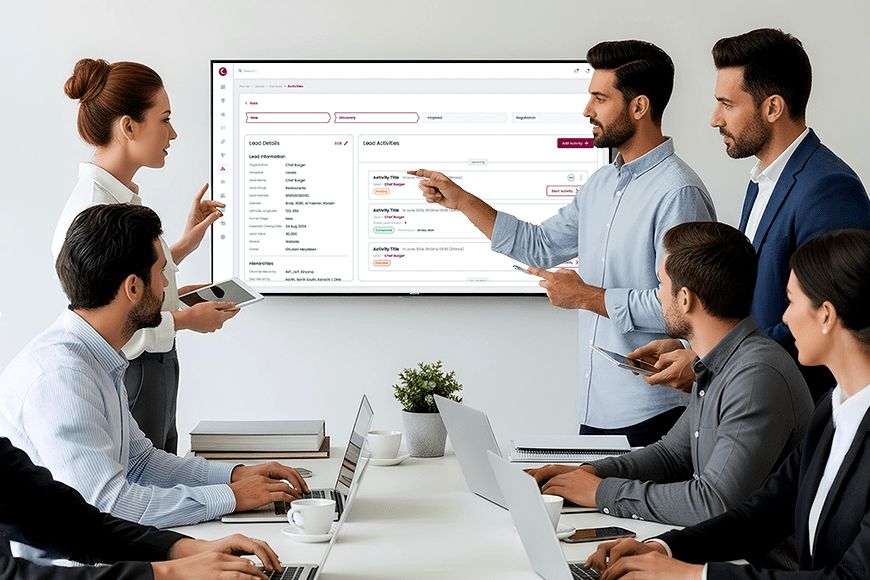
Alignment isn’t just about talking. It means sharing plans, hearing feedback, and ensuring marketing aligns with sales or customer service. When the marketing team and other areas of the business collaborate, outcomes are more powerful.
It helps notice issues quickly and keeps everyone aligned.
Impact
Or how the MaaS model can help a business grow. When marketing is measured properly, teams observe how their efforts attract new customers or retain existing customers. Good campaigns build trust and keep people loyal.
Targeted marketing will help a business reach more people. By measuring success across digital and local results, teams find what works everywhere. This makes a company gain share.
Measuring success over the long term is critical. It helps demonstrate that marketing dollars are well spent, even when it takes a while for the results to show up.
The Human Element
A marketing team as a service (MaaS) mixes talented humans and clever technologies. It is that human element where true worth shines. As much as tech offers speed and reach, it’s still humans who ignite new ideas, interpret the room and cultivate trust.
It’s not just a number or a click in marketing. It’s about genuine connection, emotion and narratives that resonate. Human creativity and gut feel steer the soul of a MaaS model. No system or AI can outsmart a real human’s talent for identifying a unique solution or market opportunity.
For instance, while launching a global brand in a new region, it’s the local team’s insights and lived experience that mold the message to suit the local culture. A human senses the subtle signals that machines overlook, such as an inflection of mood or an emerging trend. This ability allows teams to craft campaigns that resonate for every audience they reach.
When teams combine their own narratives, design, and expertise, the work shines, not just in appearance but in effect. There must be some compromise, some give and take, between clever tools and the human component. Tools can sift information, identify patterns and monitor human behavior on the web.
It’s humans who query why and bring context to what they observe. For instance, data could indicate that a post received additional clicks on a particular day, but it’s the humans who connect that to a world event or a change in the collective mood. The optimal outcomes occur when groups take advantage of both tech and touch and allow the tools to do the grunt work while having humans provide the soul.
The human factor is everything in client-agency work. A solid relationship implies that both parties can be candid, exchange feedback and solve problems quickly. Some clients want to simply offload work, but the majority want to be seen and heard.
When teams check in frequently, talk through concepts, and demonstrate compassion, trust develops. According to one study, 76% of people will change brands after a poor run-in, whereas 94% that have a great time will share it. The human side, being real and honest, that’s what has clients returning.
Narratives and emotion motivate decisions. People don’t purchase with their brains—they purchase with their hearts. Genuine narratives, shared by authentic individuals, generate confidence and make companies memorable.
Sales or support, the right word or a kind response can make someone’s terrible day better. A user’s disposition and motivation can affect the outcome. When they don’t come on so strong and exhibit genuine concern, people react more favorably.
Future Outlook
MaaS’s future outlook is promising as emerging technology transforms team collaboration, planning, and customer engagement. Businesses everywhere must catch up and reimagine where marketing belongs in their expansion strategies. The divide between vintage marketing models and shiny, tech-based arrangements is primed to expand, making change on time a necessity.
Predict the evolving trends in Marketing-as-a-Service as technology advances
MaaS will look a lot different in the next few years when the world’s teams begin adopting smart tech in everyday work. By 2026, marketing teams will employ new AI agents for tasks such as content planning, campaign tracking, and customer feedback. These tools won’t just do—they’ll learn and adapt as the market moves.
Teams will shift from tooling to working alongside AI that can identify patterns, recommend solutions, and assist with charting next actions. As teams disperse globally, the demand for succinct, up-to-date information and solutions that operate across geographies and languages will increase. This will keep teams aligned regardless of where they work.
Discuss the potential for AI and automation to enhance MaaS offerings
AI and automation will accelerate MaaS by contributing so much more than reducing manual labor. By 2026, AI agents will dominate five domains, each empowered to manage challenging tasks requiring rich context and intelligent decisions.
For instance, Content Operations Agents will transform how teams strategize, produce, and distribute content, liberating employees to prioritize fresh thinking. These agents will complement humans, not substitute them. This will allow teams to get real-time advice instead of that old-style review every quarter.
Teams will receive real-time guidance on how to adjust ads, modify web pages, or experiment with new concepts as patterns emerge. Teams need to monitor regulations and privacy laws as these will determine how AI agents launch in every region.
Highlight the growing importance of personalization in marketing strategies
Personalization has shifted from being a nice-to-have to a must-have. As AI tools learn more from customer data, they can help teams craft messages and offers that feel one-on-one, even when reaching millions.
This shift requires savvy technology and a solid plan for utilizing the data. A global shoe brand can now send personalized shoe picks to purchasers in different cities based on weather, style, or previous purchases. The real edge will belong to teams that combine AI’s speed with the human touch by knowing when to rely on data and when to intervene.
Illustrate how businesses can prepare for future changes in the marketing landscape
To keep up, they must experiment with new tools, revise outdated habits, and train employees to collaborate with humans and AI. Establish transparent guidelines for data, monitor upcoming regulations, and select tech collaborators that prioritize ethical, responsible AI.
Concentrate on forming teams who can learn and transform rapidly because everything is going to accelerate.
Conclusion
Marketing team as a service delivers speed, skill, and fresh ideas. Brands can snap up expert assistance in a flash, bypass lengthy hires, and get straight to work on actual objectives. Many people leverage this model to plug holes, deploy new tools, or test some daring plans. Teams remain lean and concentrated. Results appear quickly. A shoe brand could deploy MaaS for a worldwide debut. A tech start-up might use it to establish initial campaigns. Every case has clear victories. To maximize the benefits, align the service with actual needs. Chat with a provider, describe your objectives, and find out if the match feels good. For more smart growth goodness, don’t miss our next guide, or drop us a line with your questions.
Frequently Asked Questions
What is Marketing Team as a Service (MaaS)?
Marketing Team as a Service (MaaS) is an outsourced model in which businesses hire a remote team of marketing experts. This team provides full-service marketing assistance without companies having to bring people on staff.
How does MaaS benefit global companies?
MaaS delivers flexible access to expertise, reduces overhead, and scales rapidly with business needs. It fuels global campaigns with a team that knows the markets.
Who should consider using MaaS?
MaaS is perfect for startups, small businesses, or companies that don’t have marketing staff in-house. It fits companies entering new markets or requiring niche knowledge.
How is the performance of a MaaS team measured?
Performance is measured against transparent metrics such as lead generation, web traffic, engagement, and ROI. We provide regular reports to maintain transparency and accountability.
What types of services are included in MaaS?
Services typically cover digital marketing, content creation, social media management, branding, analytics, and campaign strategy. Teams tailor their services around client objectives.
How does MaaS ensure communication with clients?
MaaS teams employ status meetings, progress reports, and online collaboration tools. Transparent communication keeps clients up to date and able to provide feedback at every step.
Is MaaS suitable for long-term marketing strategies?
Yep, MaaS can be used for short-term campaigns as well as long-term goals. It delivers on demand experience and keeps up with evolving business requirements.