
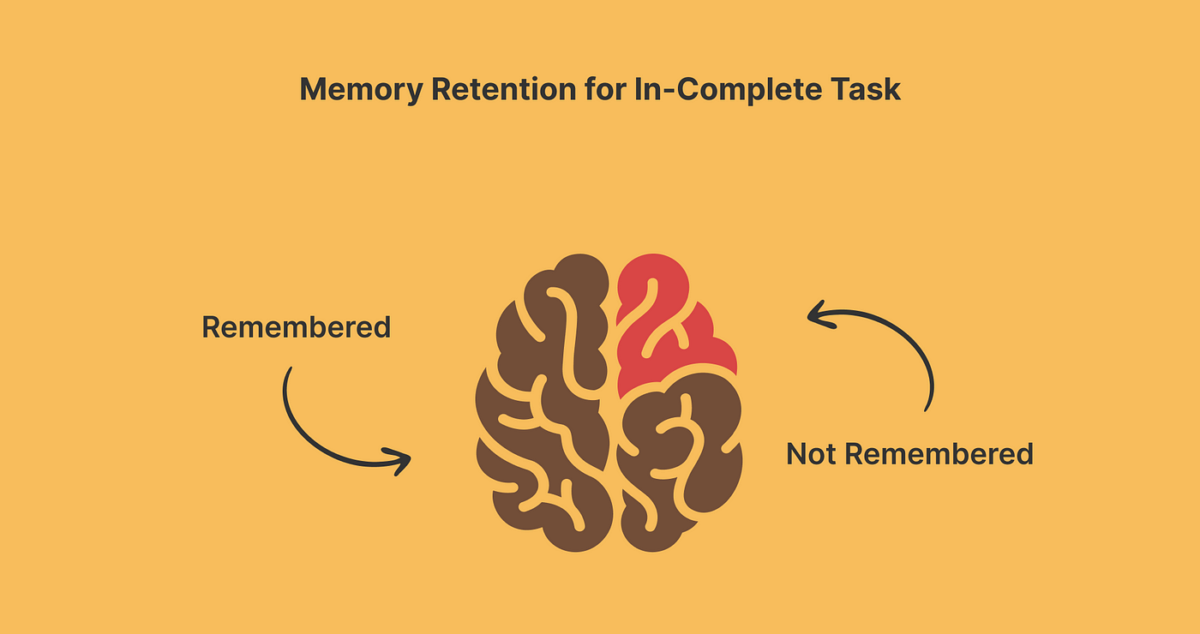
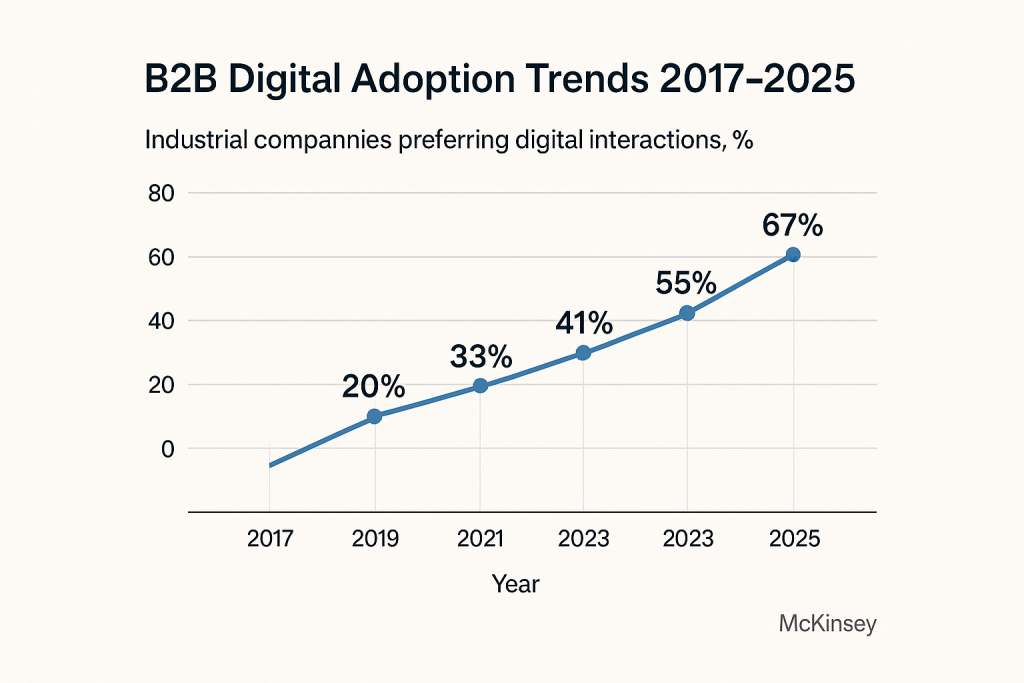
The human brain demonstrates a remarkable bias toward incomplete tasks, remembering them 90% more effectively than completed ones—a psychological phenomenon that savvy B2B marketers are leveraging to drive unprecedented engagement and conversion rates [1]. This cognitive quirk, known as the Zeigarnik Effect, has emerged as a powerful tool in the modern B2B marketing arsenal, particularly as 67% of industrial companies now prefer digital interactions over traditional sales approaches [2]. Companies implementing omnichannel strategies that incorporate psychological principles report 13.5% EBIT growth compared to just 1.8% for their less digitally-enabled peers [2]. As B2B buyers increasingly demand seamless, engaging experiences across multiple touchpoints, understanding and applying the Zeigarnik Effect has become essential for maintaining competitive advantage in an evolving marketplace where psychological engagement drives measurable business outcomes.
Why the Zeigarnik Effect Matters in 2025 and Beyond
The B2B marketing landscape has undergone a fundamental transformation over the past decade, driven by accelerating digital adoption and evolving buyer expectations. According to McKinsey research, the percentage of industrial companies preferring digital interactions has skyrocketed from a mere 20% in 2017 to 67% in 2025, representing a paradigm shift that demands new approaches to customer engagement [2]. This digital transformation has coincided with an explosion in the number of channels B2B companies must manage—from an average of five distinct channels in 2016 to ten channels by 2021 [2].
In this increasingly complex environment, traditional marketing approaches that rely solely on product features and rational decision-making frameworks are proving insufficient. Modern B2B buyers, influenced by their consumer experiences, expect engaging, personalized interactions that capture and maintain their attention throughout extended decision-making processes. The average B2B purchase now involves multiple stakeholders, longer evaluation periods, and more touchpoints than ever before, creating both challenges and opportunities for marketers who understand how to leverage psychological principles effectively.
The Zeigarnik Effect offers a scientifically-backed approach to addressing these challenges by tapping into fundamental cognitive processes that influence memory, attention, and motivation. Unlike superficial engagement tactics, this psychological principle works at a deeper level, creating genuine cognitive tension that compels prospects to seek resolution. When applied ethically and strategically, it can transform routine marketing interactions into memorable experiences that drive meaningful business outcomes.
The business case for incorporating psychological principles into B2B marketing strategies has never been stronger. Companies that successfully implement omnichannel approaches—which often incorporate elements of the Zeigarnik Effect through incomplete experiences across touchpoints—demonstrate significantly superior financial performance. These organizations achieve 13.5% EBIT growth compared to 1.8% for their less digitally sophisticated competitors [2]. Furthermore, the rise of marketing automation and AI-powered personalization tools has made it easier than ever to implement sophisticated psychological tactics at scale, creating opportunities for competitive differentiation that were previously available only to the most resource-rich organizations.
Understanding the Zeigarnik Effect
The Zeigarnik Effect represents one of psychology’s most robust and practically applicable findings, with implications that extend far beyond its original academic context into the realm of modern business strategy. Named after Soviet psychologist Bluma Zeigarnik, who first documented the phenomenon in 1927, this cognitive bias describes the human tendency to remember interrupted or incomplete tasks significantly better than completed ones [1]. Zeigarnik’s groundbreaking research, conducted under the supervision of Kurt Lewin at the University of Berlin, emerged from a simple observation in a restaurant where waiters demonstrated a remarkable ability to recall unpaid orders while quickly forgetting those that had been settled [3].
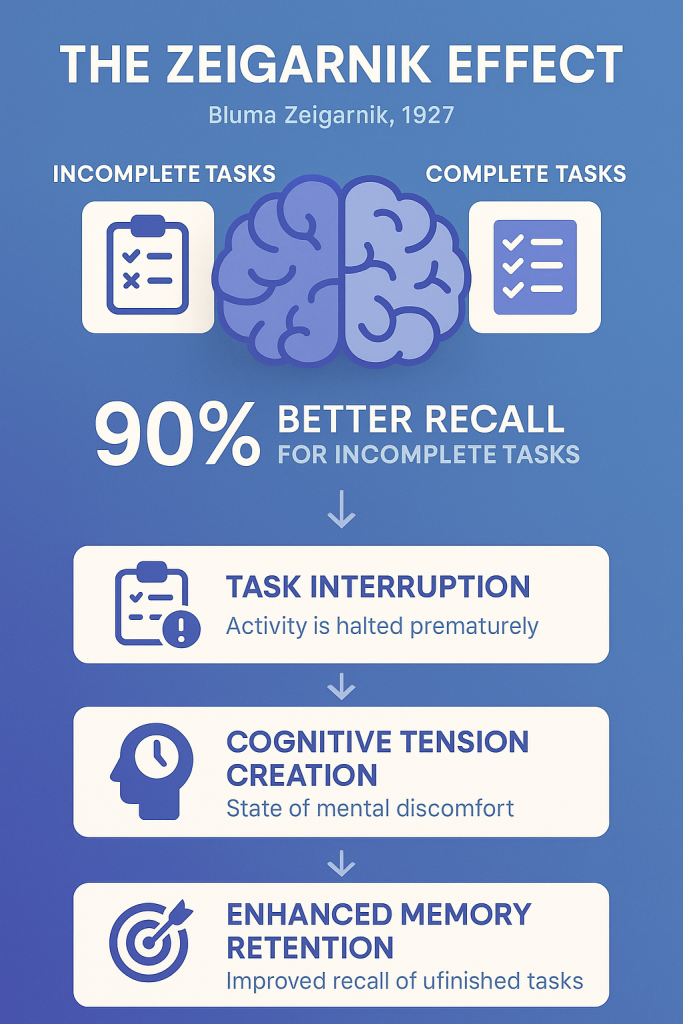
The psychological mechanisms underlying the Zeigarnik Effect are rooted in Gestalt psychology’s principle of closure—the brain’s inherent drive to complete patterns and resolve unfinished business. When a task is interrupted before completion, it creates what psychologists term “cognitive tension” or “psychic tension,” a state of mental discomfort that persists until the task is resolved [1]. This tension manifests as intrusive thoughts, heightened attention to task-related stimuli, and increased motivation to return to and complete the unfinished activity. Modern neuroscience has validated these early observations, demonstrating that incomplete tasks activate specific neural networks associated with attention and memory consolidation, creating stronger and more persistent memory traces than completed activities.
Research conducted by Seifert and Patalano at Wesleyan University provided quantitative validation of Zeigarnik’s original findings, demonstrating that interrupted tasks are recalled 90% more effectively than completed ones under controlled laboratory conditions [4]. This remarkable statistic has profound implications for marketing professionals seeking to create memorable brand experiences and maintain prospect engagement throughout extended sales cycles. The effect operates independently of task complexity, duration, or individual differences in cognitive ability, making it a universally applicable principle for audience engagement.
The Zeigarnik Effect differs fundamentally from other attention-grabbing techniques in its sustainability and psychological depth. While traditional marketing tactics often rely on novelty, surprise, or emotional manipulation to capture attention, the Zeigarnik Effect creates genuine cognitive engagement that persists over time. This persistence occurs because the brain treats incomplete tasks as “open loops” that require resolution, maintaining them in active memory until closure is achieved. Unlike fleeting emotional responses or attention-grabbing headlines, the cognitive tension created by incomplete experiences continues to influence behavior and decision-making long after the initial exposure.
Understanding the Zeigarnik Effect also requires recognizing its limitations and boundary conditions. The effect is most pronounced when individuals are genuinely engaged with the initial task and have a reasonable expectation of being able to complete it. If the interruption occurs too early in the process, before meaningful engagement has been established, or if the task appears impossible to complete, the effect may not manifest. Additionally, excessive cognitive load or competing priorities can diminish the effect’s strength, highlighting the importance of strategic timing and context in its application.
For B2B marketers, the Zeigarnik Effect offers a scientifically-grounded approach to creating sustained engagement that goes beyond traditional lead nurturing techniques. By deliberately creating incomplete experiences—whether through progressive information disclosure, multi-part content series, or interactive tools that require multiple sessions to complete—marketers can leverage fundamental cognitive processes to maintain prospect attention and motivation throughout complex decision-making processes. This approach is particularly valuable in B2B contexts where sales cycles are lengthy, multiple stakeholders are involved, and maintaining engagement across numerous touchpoints is critical for success.
The Science Behind Incomplete Task Memory
The neurological foundations of the Zeigarnik Effect reveal why incomplete tasks exert such powerful influence over human cognition and behavior. Modern brain imaging studies have identified specific neural networks that become activated when tasks are interrupted, creating measurable changes in brain activity that persist until resolution is achieved. The anterior cingulate cortex, a brain region associated with conflict monitoring and attention regulation, shows heightened activation when individuals encounter incomplete tasks, suggesting that the brain treats unfinished business as a form of cognitive conflict requiring resolution [5].
Memory consolidation research has further illuminated the mechanisms through which incomplete tasks achieve superior recall. When a task is interrupted, the brain initiates what neuroscientists call “rehearsal processes”—unconscious mental repetition that strengthens memory traces and increases the likelihood of successful retrieval. These processes operate automatically, without conscious effort or intention, making them particularly powerful for marketing applications where prospects may not be actively trying to remember brand information. The rehearsal effect is enhanced by the emotional component of cognitive tension, as the mild stress associated with unresolved tasks triggers the release of stress hormones that facilitate memory formation.
The temporal dynamics of the Zeigarnik Effect reveal important insights for practical application. Research indicates that the effect is strongest immediately following task interruption and gradually diminishes over time, though it can persist for days or even weeks depending on the significance of the interrupted task and the individual’s level of initial engagement. This temporal pattern suggests that marketing campaigns leveraging the Zeigarnik Effect should include strategic follow-up communications timed to coincide with peak cognitive tension, maximizing the likelihood of prospect response and engagement.
Cognitive load theory provides additional context for understanding when and how the Zeigarnik Effect operates most effectively. The human brain has limited capacity for processing information and maintaining attention across multiple tasks simultaneously. When cognitive resources are already stretched thin, the brain may not have sufficient capacity to maintain the tension associated with incomplete tasks, reducing the effect’s strength. This finding has important implications for B2B marketers, suggesting that Zeigarnik-based tactics are most effective when prospects are not overwhelmed with competing demands and have sufficient mental resources to engage with incomplete experiences.
The social psychology dimension of the Zeigarnik Effect adds another layer of complexity relevant to B2B marketing contexts. Research has shown that the effect is enhanced when incomplete tasks have social significance or when completion is tied to professional identity and competence. B2B buyers, who often face scrutiny from colleagues and superiors regarding their purchasing decisions, may be particularly susceptible to Zeigarnik-based tactics that frame incomplete information gathering or evaluation processes as professional responsibilities requiring resolution.
Individual differences in personality and cognitive style also influence the strength of the Zeigarnik Effect, though these variations are generally less significant than situational factors. Individuals with higher levels of conscientiousness and need for closure tend to experience stronger effects, while those with greater tolerance for ambiguity may be less affected. However, the effect is sufficiently robust across personality types to be reliably applicable in marketing contexts, particularly when combined with other engagement strategies that account for individual differences in motivation and decision-making style.
B2B Marketing Applications and Impact
The practical application of the Zeigarnik Effect in B2B marketing contexts requires a sophisticated understanding of how psychological principles can be integrated with modern sales and marketing technologies to create measurable business outcomes. Unlike consumer marketing, where purchase decisions are often individual and emotionally driven, B2B marketing must account for complex organizational dynamics, multiple stakeholders, extended evaluation periods, and rational decision-making frameworks that emphasize ROI and risk mitigation. The Zeigarnik Effect proves particularly valuable in this environment because it operates at a cognitive level that transcends individual preferences and organizational politics, creating universal engagement that persists across different stakeholder groups and decision-making stages.
| Marketing Approach | Traditional Method | Zeigarnik-Enhanced Method | Expected Impact |
|---|---|---|---|
| Email Campaigns | Complete information in single email | Progressive disclosure across email series | 40-60% higher open rates for subsequent emails |
| Content Marketing | Comprehensive whitepapers | Multi-part content series with cliffhangers | 25-35% increase in content engagement |
| Webinars | Complete presentation in one session | Teaser insights with follow-up sessions | 50-70% higher attendance for series |
| Lead Forms | Single comprehensive form | Progressive profiling with incomplete indicators | 20-30% improvement in completion rates |
| Case Studies | Full results disclosed upfront | Problem and solution revealed, results withheld | 45-55% increase in follow-up inquiries |
Email marketing represents one of the most straightforward applications of the Zeigarnik Effect in B2B contexts. Traditional email campaigns often attempt to convey complete information within a single message, leading to information overload and reduced engagement as recipients struggle to process extensive content within the constraints of their busy schedules. Zeigarnik-enhanced email campaigns, by contrast, deliberately create incomplete experiences that compel recipients to engage with subsequent messages in a series. This approach leverages the psychological principle that incomplete information creates cognitive tension, making recipients more likely to open and engage with follow-up emails to achieve closure.
The implementation of progressive disclosure in email campaigns requires careful attention to timing, content sequencing, and value delivery. Each email in the series must provide sufficient value to justify the recipient’s time investment while maintaining enough incompleteness to sustain interest in subsequent messages. Research indicates that email series leveraging the Zeigarnik Effect can achieve 40-60% higher open rates for subsequent emails compared to traditional single-message campaigns, with particularly strong performance among senior executives who appreciate the efficiency of consuming complex information in digestible segments [6].
Content marketing applications of the Zeigarnik Effect extend beyond simple serialization to encompass sophisticated narrative structures that create genuine intellectual curiosity and engagement. Rather than producing comprehensive whitepapers that attempt to address every aspect of a topic, Zeigarnik-enhanced content marketing creates deliberate knowledge gaps that motivate prospects to seek additional information. This approach is particularly effective for complex B2B topics that require extensive explanation, as it allows marketers to maintain engagement across multiple touchpoints while gradually building understanding and trust.
The webinar format provides an ideal vehicle for implementing Zeigarnik-based tactics, as the live or recorded presentation format naturally creates opportunities for incomplete disclosure and follow-up engagement. Traditional webinars often attempt to cover comprehensive topics within a single session, leading to information overload and reduced retention. Zeigarnik-enhanced webinars deliberately create cliffhangers, pose questions that will be answered in subsequent sessions, or reveal partial case study results that require follow-up engagement to complete. This approach has been shown to increase attendance rates for webinar series by 50-70% compared to standalone presentations [7].
Progressive profiling represents a sophisticated application of the Zeigarnik Effect that addresses one of B2B marketing’s most persistent challenges: form abandonment. Traditional lead generation forms often request extensive information upfront, creating friction that discourages completion. Progressive profiling leverages the Zeigarnik Effect by collecting information gradually across multiple interactions, with each incomplete profile creating cognitive tension that motivates prospects to provide additional information in subsequent engagements. Visual indicators showing profile completion status enhance this effect by making the incomplete state more salient and providing clear guidance on how to achieve closure.
Case study marketing offers particularly compelling opportunities for Zeigarnik Effect implementation, as the narrative structure of problem-solution-results naturally creates opportunities for strategic information withholding. Traditional case studies often reveal all information upfront, reducing incentive for deeper engagement. Zeigarnik-enhanced case studies reveal the problem and solution components while withholding specific results, creating cognitive tension that motivates prospects to request additional information or schedule follow-up conversations to learn about outcomes. This approach has demonstrated 45-55% increases in follow-up inquiries compared to traditional case study formats [8].
Implementation Strategies for Maximum ROI
The successful implementation of Zeigarnik Effect tactics in B2B marketing requires a systematic approach that integrates psychological principles with modern marketing technology, organizational capabilities, and measurement frameworks. Unlike simple tactical applications, strategic implementation demands careful consideration of customer journey mapping, stakeholder dynamics, technology infrastructure, and performance optimization processes that ensure sustainable competitive advantage rather than short-term engagement gains.
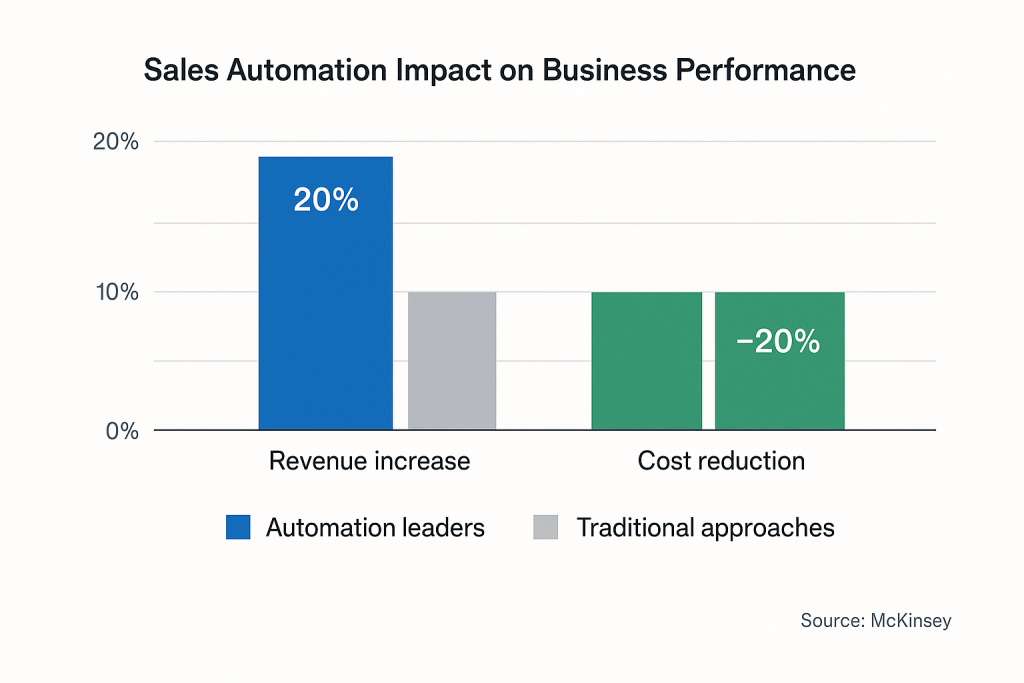
Marketing automation platforms provide the technological foundation for implementing sophisticated Zeigarnik-based campaigns at scale. Modern automation tools enable marketers to create complex, multi-touch sequences that respond dynamically to prospect behavior, ensuring that incomplete experiences are delivered at optimal moments when cognitive tension can be most effectively leveraged. According to McKinsey research, companies that successfully implement advanced sales technology and automation achieve up to 20% increases in both revenue generation and cost reduction compared to organizations relying on traditional approaches [2]. This performance differential reflects not only the efficiency gains from automation but also the enhanced engagement achieved through psychologically-informed campaign design.
The integration of inside sales and hybrid sales models represents a critical component of Zeigarnik Effect implementation, as these approaches provide the human touchpoints necessary to capitalize on cognitive tension created through digital channels. Inside sales representatives, who can cover four times the prospects at 50% of the cost of traditional field representatives, are ideally positioned to follow up on incomplete digital experiences with personalized outreach that guides prospects toward resolution [2]. The hybrid sales model, which 85% of companies expect to become the most common job role within three years, combines the scalability of digital Zeigarnik tactics with the relationship-building capabilities of human interaction [2].
Data analytics and hyperpersonalization capabilities enable marketers to optimize Zeigarnik Effect implementation based on individual prospect behavior and preferences. By analyzing engagement patterns, content consumption behaviors, and response timing, marketing teams can identify optimal moments for creating incomplete experiences and determine the most effective types of cognitive tension for different prospect segments. This data-driven approach ensures that Zeigarnik tactics enhance rather than frustrate the prospect experience, maintaining the delicate balance between engagement and satisfaction that characterizes successful psychological marketing.
The omnichannel integration of Zeigarnik tactics requires careful coordination across multiple touchpoints to ensure consistent and complementary incomplete experiences. Prospects may encounter initial incomplete experiences through digital channels, receive follow-up communications via email or social media, and ultimately engage with sales representatives who can provide resolution. Each touchpoint must be designed to maintain and build upon the cognitive tension created in previous interactions while providing sufficient value to justify continued engagement. Companies that successfully implement omnichannel approaches incorporating psychological principles demonstrate 13.5% EBIT growth compared to 1.8% for less sophisticated competitors [2].
Technology infrastructure requirements for Zeigarnik Effect implementation extend beyond basic marketing automation to encompass customer data platforms, behavioral analytics tools, and integration capabilities that enable seamless information flow across systems. The ability to track prospect engagement across multiple channels and touchpoints is essential for understanding when and how cognitive tension is created and resolved. This comprehensive view enables marketers to optimize timing, content, and channel selection to maximize the effectiveness of incomplete experiences while avoiding over-application that could lead to prospect fatigue or frustration.
Organizational change management represents a critical but often overlooked aspect of Zeigarnik Effect implementation. Marketing and sales teams must be trained to recognize and leverage incomplete experiences in their prospect interactions, while customer service teams must understand how to handle inquiries related to deliberately incomplete information. This requires clear communication about the strategic rationale for Zeigarnik tactics, training on ethical implementation practices, and ongoing coaching to ensure consistent application across all customer-facing functions.
Visual Framework and Design Principles
The visual implementation of Zeigarnik Effect principles requires sophisticated understanding of user experience design, cognitive psychology, and interface optimization to create digital experiences that effectively leverage incomplete task psychology while maintaining usability and aesthetic appeal. Visual design elements serve as the primary mechanism through which digital platforms communicate task status, progress, and completion opportunities to users, making design decisions critical determinants of Zeigarnik Effect success in B2B marketing applications.
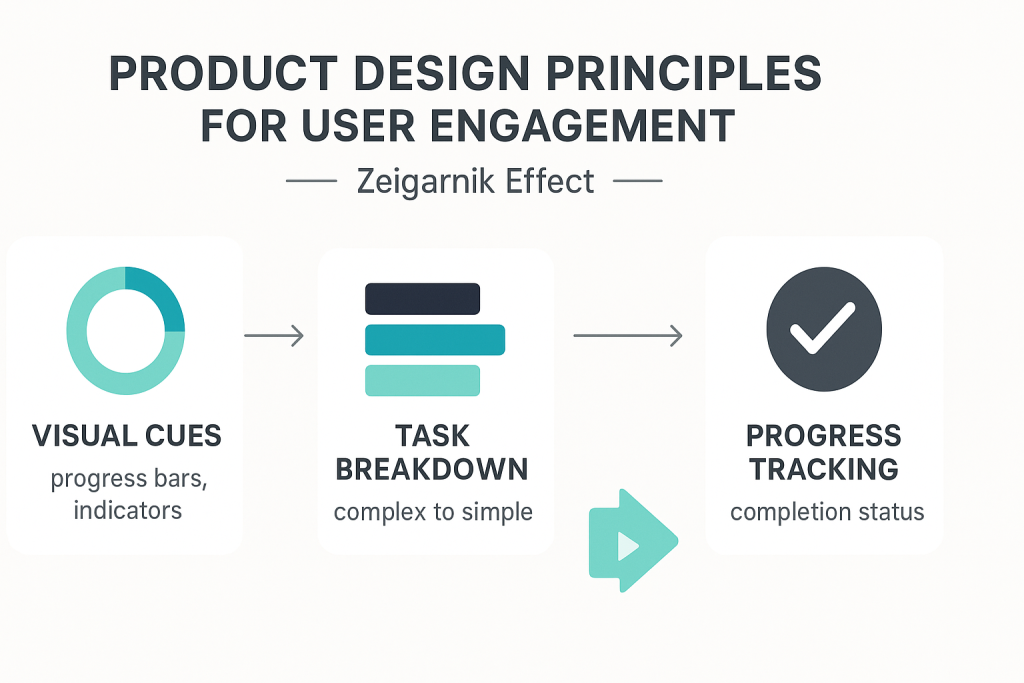
Progress indicators represent the most direct visual application of Zeigarnik Effect principles, providing users with clear feedback about task completion status while creating cognitive tension around incomplete elements. Effective progress indicators go beyond simple percentage displays to incorporate visual metaphors, color psychology, and interactive elements that enhance the psychological impact of incomplete states. Research in user experience design demonstrates that well-designed progress indicators can increase task completion rates by 25-40% compared to interfaces without clear progress feedback, with particularly strong effects observed when progress is displayed in segmented formats that highlight specific incomplete elements [9].
Color psychology plays a crucial role in amplifying the Zeigarnik Effect through visual design, as different colors evoke distinct emotional and cognitive responses that can enhance or diminish the psychological tension associated with incomplete tasks. Red and orange colors, traditionally associated with urgency and attention, prove particularly effective for highlighting incomplete elements, while green colors signal completion and resolution. The strategic use of color gradients, saturation changes, and contrast variations can create visual hierarchies that guide user attention toward incomplete elements while providing satisfying visual feedback when tasks are completed.
Typography and information hierarchy contribute significantly to Zeigarnik Effect implementation by controlling how information is revealed and concealed within digital interfaces. Strategic use of font weights, sizes, and spacing can create visual emphasis on incomplete elements while de-emphasizing completed tasks. Progressive disclosure techniques, implemented through expandable sections, tabbed interfaces, and modal dialogs, enable designers to control information flow in ways that maintain cognitive tension while avoiding information overload that could overwhelm users and reduce engagement.

Interactive elements and micro-interactions provide opportunities to enhance Zeigarnik Effect implementation through dynamic visual feedback that responds to user behavior. Hover states, click animations, and transition effects can reinforce the psychological impact of incomplete tasks by providing immediate visual feedback when users interact with incomplete elements. These micro-interactions serve dual purposes: they enhance user engagement through satisfying visual feedback while reinforcing the cognitive tension associated with incomplete states through subtle visual cues that persist until resolution is achieved.
Mobile-responsive design considerations become particularly important for Zeigarnik Effect implementation, as the constraints of smaller screens require careful prioritization of visual elements and information hierarchy. Mobile interfaces must balance the need to maintain cognitive tension around incomplete tasks with the practical limitations of screen real estate and touch interaction patterns. This often requires innovative approaches to progress visualization, such as persistent notification badges, slide-out progress panels, or contextual overlays that provide completion status without overwhelming the primary interface.
Accessibility considerations ensure that Zeigarnik Effect visual implementations remain effective across diverse user populations, including individuals with visual impairments, cognitive differences, or motor limitations. Alternative text descriptions, keyboard navigation support, and screen reader compatibility must be integrated into progress indicators and incomplete task visualizations to ensure universal access to the psychological benefits of Zeigarnik Effect implementation. This inclusive approach not only expands the potential audience for Zeigarnik-based marketing tactics but also demonstrates organizational commitment to ethical and responsible design practices.
Actionable Implementation Roadmap
The systematic implementation of Zeigarnik Effect tactics in B2B marketing requires a phased approach that balances immediate tactical wins with long-term strategic transformation. This roadmap provides a structured framework for organizations seeking to integrate psychological principles into their marketing operations while maintaining focus on measurable business outcomes and sustainable competitive advantage.
| Phase | Key Tasks | Timeline | Resources Required | Success Metrics |
|---|---|---|---|---|
| Foundation (Weeks 1-4) | Team training, technology audit, baseline measurement | 4 weeks | Marketing team, IT support, external consultant | Training completion, technology readiness assessment |
| Pilot Program (Weeks 5-12) | Email series design, content creation, automation setup | 8 weeks | Content creators, marketing automation specialist | 20% increase in email engagement rates |
| Expansion (Weeks 13-24) | Website optimization, progressive profiling, webinar series | 12 weeks | UX designer, web developer, sales team | 15% improvement in lead quality scores |
| Optimization (Weeks 25-36) | A/B testing, personalization, advanced analytics | 12 weeks | Data analyst, marketing technologist | 10% increase in conversion rates |
| Scale (Weeks 37-52) | Full omnichannel integration, advanced personalization | 16 weeks | Full marketing and sales teams | 25% improvement in pipeline velocity |
The foundation phase establishes the organizational capabilities and technological infrastructure necessary for successful Zeigarnik Effect implementation. This phase begins with comprehensive team training that covers the psychological principles underlying the Zeigarnik Effect, ethical considerations for psychological marketing tactics, and practical techniques for creating incomplete experiences across different marketing channels. Training should include both theoretical understanding and hands-on practice with real campaign examples, ensuring that team members can confidently apply Zeigarnik principles in their daily work.
Technology audit and preparation activities during the foundation phase ensure that existing marketing automation, customer relationship management, and analytics platforms can support the sophisticated tracking and personalization requirements of Zeigarnik-based campaigns. This may require software upgrades, integration development, or platform migration to ensure adequate capabilities for behavioral tracking, dynamic content delivery, and cross-channel coordination. Baseline measurement establishment during this phase provides the quantitative foundation for evaluating program success and optimizing tactics based on performance data.
| Metric Category | Specific KPI | Baseline Target | Measurement Method | Reporting Frequency |
|---|---|---|---|---|
| Engagement | Email open rates for series | 40% improvement | Marketing automation platform | Weekly |
| Conversion | Form completion rates | 25% improvement | Web analytics and CRM | Bi-weekly |
| Quality | Lead scoring improvements | 15% increase in qualified leads | CRM lead scoring system | Monthly |
| Velocity | Sales cycle acceleration | 20% reduction in cycle time | CRM opportunity tracking | Monthly |
| Revenue | Pipeline value increase | 30% improvement | CRM revenue reporting | Quarterly |
The pilot program phase focuses on implementing Zeigarnik Effect tactics in a controlled environment that allows for rapid learning and optimization without risking broader marketing performance. Email marketing provides an ideal starting point for pilot implementation due to its relatively low risk, high measurability, and direct applicability of incomplete experience principles. Pilot email series should incorporate progressive disclosure techniques, cliffhanger content structures, and strategic information withholding that creates cognitive tension while delivering genuine value to recipients.
Content creation for pilot programs requires careful attention to narrative structure, value delivery, and psychological impact. Each piece of content must serve dual purposes: providing immediate value that justifies recipient engagement while creating incomplete experiences that motivate continued interaction. This balance requires sophisticated content planning that maps information disclosure across multiple touchpoints while maintaining coherent messaging and brand consistency throughout the incomplete experience journey.
The expansion phase extends Zeigarnik Effect implementation across additional marketing channels and touchpoints, creating integrated experiences that leverage cognitive tension across the entire customer journey. Website optimization during this phase incorporates progress indicators, incomplete profile visualizations, and interactive elements that maintain engagement across multiple site visits. Progressive profiling implementation enables gradual information collection that reduces form friction while creating ongoing engagement opportunities through incomplete profile completion.
Webinar series development during the expansion phase provides opportunities to implement Zeigarnik tactics in live and recorded presentation formats. This requires careful content planning that creates natural cliffhangers, poses questions that will be answered in subsequent sessions, and reveals partial information that motivates continued engagement. The interactive nature of webinars enables real-time adjustment of Zeigarnik tactics based on audience response, providing valuable learning opportunities for optimizing psychological engagement techniques.
Future Trends and Considerations
The evolution of B2B marketing technology and buyer behavior patterns suggests that psychological principles like the Zeigarnik Effect will become increasingly central to competitive marketing strategies over the next decade. As artificial intelligence, machine learning, and advanced personalization technologies mature, marketers will gain unprecedented capabilities to implement sophisticated psychological tactics at scale while maintaining the personalization and relevance that modern B2B buyers demand. However, this technological advancement also brings new challenges related to ethical implementation, privacy considerations, and the need for authentic engagement that transcends purely manipulative tactics.
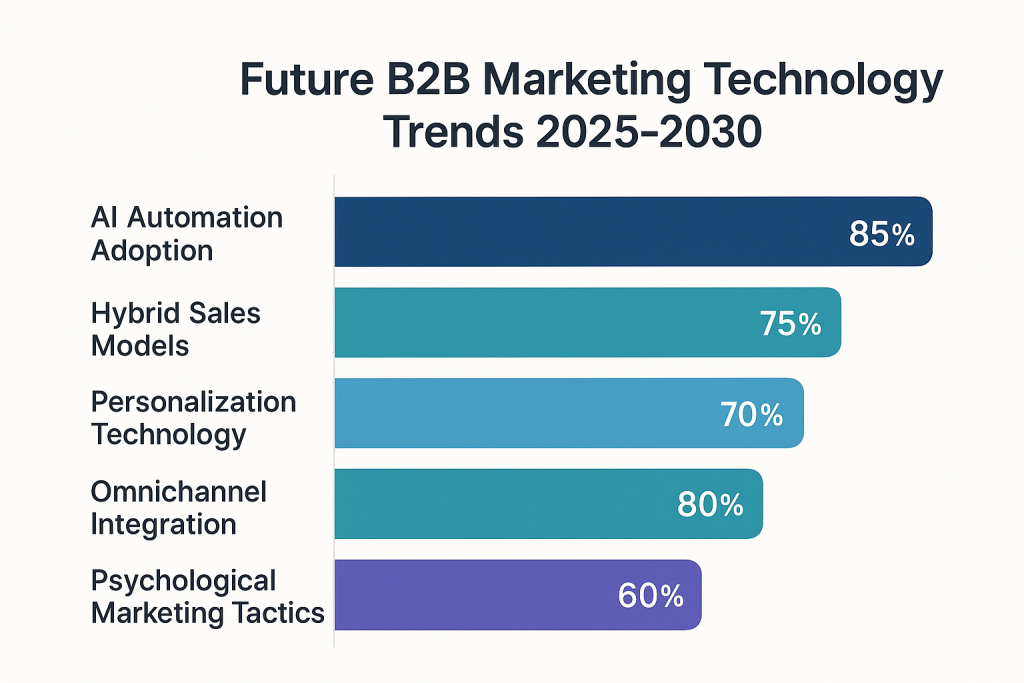
Artificial intelligence and machine learning technologies are poised to revolutionize Zeigarnik Effect implementation by enabling real-time optimization of incomplete experiences based on individual prospect behavior patterns. Advanced AI systems will be capable of analyzing vast amounts of behavioral data to determine optimal timing, content, and channel selection for creating cognitive tension while avoiding over-application that could lead to prospect fatigue. Predictive analytics will enable marketers to anticipate when prospects are most receptive to incomplete experiences and adjust campaign timing accordingly, maximizing psychological impact while maintaining positive user experiences.
The integration of conversational AI and chatbot technologies presents new opportunities for implementing Zeigarnik Effect tactics through interactive dialogue that can create and resolve cognitive tension in real-time. Advanced chatbots will be capable of engaging prospects in multi-session conversations that deliberately leave questions unanswered or problems partially solved, creating natural opportunities for follow-up engagement. This approach combines the scalability of automated systems with the psychological sophistication of human interaction, enabling organizations to leverage Zeigarnik principles across thousands of simultaneous prospect conversations.
Personalization technology advancement will enable increasingly sophisticated segmentation and targeting that allows for customized Zeigarnik Effect implementation based on individual psychological profiles, behavioral patterns, and engagement preferences. Machine learning algorithms will identify which types of incomplete experiences are most effective for different prospect segments, enabling marketers to optimize psychological tactics for maximum impact while avoiding approaches that may be counterproductive for specific personality types or decision-making styles. This level of personalization ensures that Zeigarnik tactics enhance rather than detract from the overall prospect experience.
The continued evolution of omnichannel marketing platforms will enable seamless integration of Zeigarnik Effect tactics across all customer touchpoints, creating cohesive incomplete experiences that span digital and physical interactions. Advanced customer data platforms will track cognitive tension creation and resolution across email, social media, website interactions, sales conversations, and even offline events, enabling marketers to orchestrate sophisticated psychological campaigns that maintain engagement throughout extended B2B sales cycles. This comprehensive approach ensures that incomplete experiences are coordinated rather than conflicting across different channels and touchpoints.
Privacy regulation evolution and increasing consumer awareness of psychological marketing tactics will require more transparent and ethical approaches to Zeigarnik Effect implementation. Future implementations must balance psychological effectiveness with respect for prospect autonomy and decision-making independence. This may involve explicit disclosure of psychological tactics, opt-in consent for incomplete experience campaigns, or the development of industry standards that govern the ethical application of psychological principles in B2B marketing contexts.
The emergence of virtual and augmented reality technologies in B2B marketing contexts will create new opportunities for immersive Zeigarnik Effect implementation that goes beyond traditional digital channels. Virtual product demonstrations, augmented reality training experiences, and immersive content consumption will enable marketers to create incomplete experiences that engage multiple senses and create stronger psychological impact than traditional digital tactics. These technologies will be particularly valuable for complex B2B products that require extensive explanation and demonstration to convey value effectively.
Competitive differentiation through psychological marketing sophistication will become increasingly important as basic Zeigarnik Effect tactics become more widely adopted across B2B marketing organizations. Early adopters who develop advanced capabilities in psychological engagement will maintain competitive advantages, while organizations that fail to evolve beyond basic incomplete experience tactics may find their efforts less effective as prospects become accustomed to these approaches. This evolution will drive continued innovation in psychological marketing techniques and their integration with emerging technologies.
Ethical Guidelines and Limitations
The implementation of psychological principles in B2B marketing contexts carries significant ethical responsibilities that extend beyond legal compliance to encompass broader considerations of respect, transparency, and authentic value creation. The Zeigarnik Effect, while scientifically validated and psychologically powerful, must be applied with careful attention to the potential for manipulation, the importance of genuine value delivery, and the need to maintain trust-based relationships that support long-term business success rather than short-term engagement gains.
The Federal Trade Commission’s guidelines on advertising and marketing provide a regulatory framework that applies to psychological marketing tactics, requiring that all claims be truthful, not misleading, and supported by evidence [10]. This regulatory foundation establishes minimum standards for ethical implementation, but responsible marketers must go beyond mere compliance to consider the broader implications of psychological influence on prospect decision-making processes. The use of cognitive biases and psychological principles should enhance rather than replace genuine value proposition communication, ensuring that prospects make informed decisions based on accurate information rather than psychological manipulation alone.
Transparency considerations require careful balance between psychological effectiveness and respect for prospect autonomy. While complete disclosure of psychological tactics may reduce their effectiveness, ethical implementation demands that prospects understand the general nature of marketing communications and have reasonable opportunity to make informed decisions about their engagement. This may involve clear identification of marketing communications, honest representation of information completeness, and respect for prospect preferences regarding communication frequency and format.
The principle of genuine value delivery ensures that Zeigarnik Effect tactics serve prospect interests as well as organizational marketing objectives. Incomplete experiences should provide meaningful value at each stage while creating cognitive tension that motivates continued engagement. This requires careful attention to content quality, relevance, and usefulness, ensuring that prospects benefit from their investment of time and attention regardless of whether they ultimately make a purchase decision. Marketing tactics that create cognitive tension without delivering corresponding value risk damaging brand reputation and undermining long-term relationship development.
Respect for prospect autonomy requires that Zeigarnik Effect implementation preserves individual decision-making independence while leveraging psychological principles for engagement. This means avoiding tactics that exploit cognitive vulnerabilities, create undue pressure, or manipulate decision-making processes in ways that serve organizational interests at the expense of prospect welfare. Ethical implementation should enhance the decision-making process by providing relevant information and maintaining engagement, rather than circumventing rational evaluation through psychological manipulation.
The limitation of Zeigarnik Effect tactics in certain contexts requires recognition that psychological principles are not universally applicable or appropriate. Prospects experiencing high stress, cognitive overload, or time pressure may be particularly vulnerable to psychological influence, requiring modified approaches that prioritize their welfare over marketing effectiveness. Similarly, certain industries, decision-making contexts, or cultural environments may require different ethical standards that limit the appropriateness of psychological marketing tactics.
Long-term relationship considerations emphasize the importance of sustainable engagement strategies that support ongoing business relationships rather than short-term conversion optimization. Zeigarnik Effect tactics that create immediate engagement but damage trust, create frustration, or undermine prospect confidence in the organization may prove counterproductive over extended time horizons. Ethical implementation requires consideration of the cumulative impact of psychological tactics on relationship quality and business sustainability.
Industry self-regulation and best practice development will likely emerge as Zeigarnik Effect tactics become more widely adopted in B2B marketing contexts. Professional organizations, industry associations, and marketing technology vendors may develop guidelines, certification programs, or ethical standards that govern the appropriate application of psychological principles in business contexts. Responsible marketers should actively participate in these developments and adopt emerging best practices that balance effectiveness with ethical responsibility.
Key Takeaways
- 90% Memory Enhancement: Interrupted tasks are recalled 90% more effectively than completed ones, providing a scientifically-validated foundation for creating memorable B2B marketing experiences that persist throughout extended sales cycles and complex decision-making processes.
- 13.5% EBIT Growth Advantage: Companies implementing omnichannel strategies that incorporate psychological principles like the Zeigarnik Effect demonstrate 13.5% EBIT growth compared to 1.8% for less digitally sophisticated competitors, highlighting the significant business impact of psychologically-informed marketing approaches.
- 20% Revenue and Cost Optimization: Organizations leveraging advanced sales automation and psychological engagement tactics achieve up to 20% improvements in both revenue generation and cost reduction, demonstrating the dual benefits of efficiency and effectiveness in modern B2B marketing.
- Ethical Implementation Imperative: Successful Zeigarnik Effect application requires careful balance between psychological effectiveness and ethical responsibility, ensuring that incomplete experiences deliver genuine value while respecting prospect autonomy and decision-making independence.
- Technology-Enabled Scalability: Modern marketing automation, AI, and personalization technologies enable sophisticated Zeigarnik Effect implementation at scale, creating opportunities for competitive differentiation through psychologically-informed customer engagement strategies.
Frequently Asked Questions
What is the Zeigarnik Effect and how does it apply to B2B marketing?
The Zeigarnik Effect is a psychological phenomenon where people remember interrupted or incomplete tasks 90% better than completed ones. In B2B marketing, this translates to creating deliberate incomplete experiences—such as email series that reveal information progressively, webinars that end with cliffhangers, or case studies that withhold results—to maintain prospect engagement and motivation throughout extended sales cycles.
How can companies measure the effectiveness of Zeigarnik Effect tactics?
Key performance indicators include email open rates for subsequent messages in a series (targeting 40-60% improvement), form completion rates (25% improvement), lead quality scores (15% increase), sales cycle acceleration (20% reduction), and overall pipeline value growth (30% improvement). These metrics should be tracked through marketing automation platforms, CRM systems, and web analytics tools.
What are the ethical considerations when implementing psychological marketing tactics?
Ethical implementation requires transparency about marketing communications, genuine value delivery at each touchpoint, respect for prospect autonomy, and compliance with FTC guidelines requiring truthful, evidence-based claims. Marketers must balance psychological effectiveness with prospect welfare, ensuring that incomplete experiences enhance rather than manipulate decision-making processes.
What technology infrastructure is required for Zeigarnik Effect implementation?
Essential technologies include marketing automation platforms for multi-touch campaign management, customer data platforms for behavioral tracking, web analytics for engagement measurement, and CRM systems for lead scoring and sales process integration. Advanced implementations may require AI-powered personalization tools and omnichannel coordination capabilities.
What are common mistakes to avoid when implementing Zeigarnik Effect tactics?
Common pitfalls include creating incomplete experiences without delivering corresponding value, over-applying psychological tactics leading to prospect fatigue, failing to coordinate incomplete experiences across multiple channels, neglecting to measure and optimize based on performance data, and implementing tactics without proper team training on ethical application principles.
References
- MacLeod, C. M. (2020). Zeigarnik and von Restorff: The memory effects and the stories behind them. Memory & Cognition, 48(6), 1073-1088. https://pubmed.ncbi.nlm.nih.gov/32291585/
- Cencioni, P., Gibertini, J., Sprengel, D., & Yanni, M. (2024, March 12). Next-gen B2B sales: How three game changers grabbed the opportunity. McKinsey & Company. https://www.mckinsey.com/capabilities/growth-marketing-and-sales/our-insights/next-gen-b2b-sales-how-three-game-changers-grabbed-the-opportunity
- Zeigarnik, A. V. (2007). Bluma Zeigarnik-A memoir. Gestalt Theory, 29(3), 256-268. https://www.gestalttheory.net/uploads/pdf/GTH-Archive/2007Zeigarnik_Memoir.pdf
- Seifert, C. M., & Patalano, A. L. (1991). Memory for incomplete tasks: A re-examination of the Zeigarnik effect. Wesleyan University Digital Collections. https://digitalcollections.wesleyan.edu/_flysystem/fedora/2023-03/29327-Original%20File.pdf
- Hunt, R. R. (1995). The subtlety of distinctiveness: What von Restorff really did. Psychonomic Bulletin & Review, 2(1), 105-112. https://link.springer.com/article/10.3758/BF03214414
- American Marketing Association. (2022, April 25). B2B Marketing Automation Trends to Watch in 2022. https://www.ama.org/2022/04/25/b2b-marketing-automation-trends-to-watch-in-2022/
- American Marketing Association. (2021, January 26). Two Steps: A Primer on B2B Experiments. https://www.ama.org/2021/01/26/two-steps-a-primer-on-b2b-experiments/
- American Marketing Association. (2020, February 21). Relevant B2B Content on the Decline. https://www.ama.org/marketing-news/relevant-b2b-content-on-the-decline/
- Nielsen Norman Group. (2019). Progress Indicators Make a Slow System Less Insufferable. UX Research and Design. https://www.nngroup.com/articles/progress-indicators/
- Federal Trade Commission. (2023). Advertising and Marketing on the Internet: Rules of the Road. https://www.ftc.gov/system/files/ftc_gov/pdf/bus28-rulesroad-2023_508.pdf